

What if the “perfect”
Key Takeaways
- Understand the shift toward natural language and why clarity now outweighs repetitive keyword strings in the 2026 search landscape.
- Master the “Golden Rule” of placing your core benefit within the first 30 characters to ensure your etsy listing titles shine on mobile screens.
- Identify how to avoid common pitfalls like keyword cannibalization and the “Wall of Text” to keep your shop organized and approachable.
- Follow a simple, step-by-step framework to find high-intent phrases that connect your unique products with the right shoppers.
- Discover how a human-first SEO strategy creates a more peaceful and sustainable path to growing your online presence.
Why Your Etsy Listing Titles Matter More Than Ever in 2026
In the past, many of us felt pressured to cram every possible search term into our shop listings. It often felt robotic and a bit stressful; like we were writing for a machine rather than a person. However, as we look at the Etsy platform overview, it's clear the marketplace is maturing. By 2026, the algorithm has evolved to prioritize the human experience. Your etsy listing titles aren't just data points for a computer; they're the very first handshake you offer a potential customer.
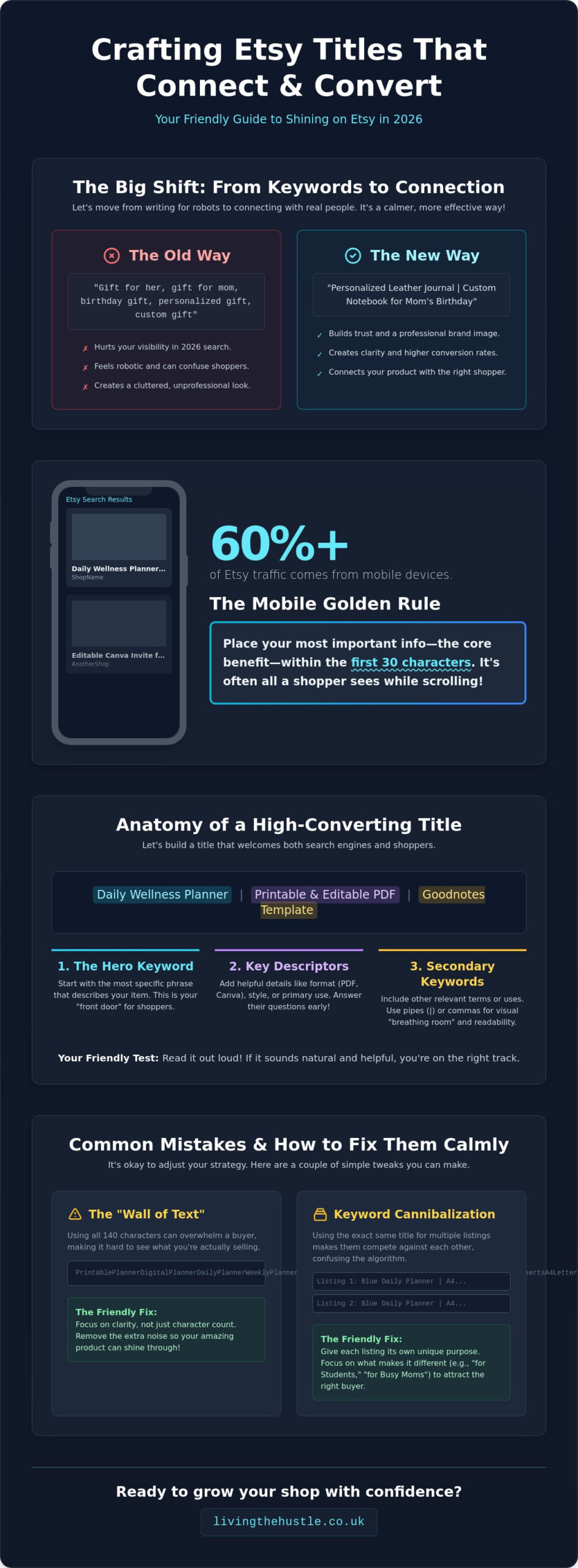
When a shopper sees a title that makes sense immediately, they feel a sense of relief. They don't have to spend energy decoding a long string of commas and repetitive words. This clarity leads directly to higher conversion rates. A scannable title reduces the mental friction that often stops someone from clicking “Add to Basket.” It's about creating a smooth, unhurried path for your buyers. Since over 60% of Etsy's traffic now comes from mobile devices, your titles must be easy to read on small screens where space is limited and attention is a gift.
The Death of Keyword Stuffing
The “old way” of SEO involved long, repetitive strings that looked like “Gift for her, gift for mom, birthday gift, personalized gift.” Today, this approach actually hurts your visibility. Etsy's 2026 algorithm is sophisticated enough to identify and de-prioritize these bot-like patterns. Beyond the technical side, there's an emotional cost to the old method. Clean, thoughtful titles build a professional brand image. They signal that you're a real person who cares about the details. This helps replace buyer confusion with confidence, making your shop feel like a trustworthy place to spend money. If you've been feeling stuck with low traffic, moving away from these cluttered strings is a great first step toward peace of mind.
Search-Ready vs. Buyer-Friendly
What does it mean to be “search-ready”? These are the core keywords that help the system categorize your work. On the other hand, being “buyer-friendly” means using natural language that helps a human choose you. Think of it as a calm middle ground. You want enough information to be found, but enough heart to be chosen. Your etsy listing titles should answer the shopper's unspoken questions about what the item is and who it's for. For more help with the technical side of research without the overwhelm, checking out tools like eRank for Etsy sellers can help you find that balance. By focusing on readability, you're not just following a trend; you're building a sustainable business that respects your customer's time.
The Anatomy of a High-Converting Etsy Title
Building a title that converts is like setting a beautiful table for a guest. You want everything to be in its right place so your visitor feels welcome and informed. While the algorithm needs certain data, your primary goal is to speak directly to the person behind the screen. Crafting effective etsy listing titles requires a gentle balance between technical precision and a warm, human touch. When you get this right, you'll find that your shop feels more like a professional boutique and less like a cluttered warehouse.
The “Golden Rule” for 2026 is to place your most vital information within the first 30 characters. Since over 60% of Etsy traffic now happens on mobile devices, these opening words are often all a shopper sees while scrolling. If you are selling digital products, this is where you should mention the format or the main use. Phrases like “Canva Template,” “Printable PDF,” or “Editable Invite” help answer a buyer's unspoken questions before they even click. To stay aligned with the latest platform standards, you can review Etsy's official guidance on title structure and clarity.
The Critical First Three Words
The beginning of your title is your shop's most valuable real estate. You don't want to waste it on vague words or filler. Instead, lead with your “hero keyword.” This is the specific phrase that describes exactly what you are selling. If you are unsure which phrase carries the most weight, using a tool like eRank for Etsy sellers can help you identify high-intent keywords that real shoppers are typing into the search bar. For example, instead of starting with “Beautiful Digital Item,” try “Daily Wellness Planner.” It is clear, direct, and immediately helpful.
Balancing Keywords with Natural Language
Once you have your hero keyword in place, you can weave in secondary descriptors. Use punctuation like pipes (|) or commas to create visual breathing room. This makes the text much easier to digest and prevents that “wall of text” feeling that can overwhelm a buyer. Titles that sound human and helpful naturally encourage more shoppers to click because they feel an immediate connection to the product's purpose. Always use the “read it out loud” test. If a sentence feels clunky or repetitive when spoken, it will likely feel the same to your customer. If you're looking to refine your creative process further, you might enjoy exploring The Art of Design to help your products truly shine. By focusing on flow and friendliness, you ensure your etsy listing titles work for the algorithm and the person alike.
Common Etsy Title Mistakes (and How to Fix Them Calmly)
It's completely normal to feel a bit uneasy when you see your traffic dip or your listings aren't performing as they used to. Many of us were taught that more is always better, leading to the common “Wall of Text” trap. While Etsy allows for 140 characters, filling every inch with text often creates a cluttered experience that overwhelms shoppers. If a buyer can't instantly identify what you're selling, they'll likely move on to a shop that feels clearer and more organized. Refining your etsy listing titles doesn't have to be a source of stress; it's simply a process of removing the noise so your work can shine.
Another common hurdle is “Keyword Cannibalization.” This happens when you use the exact same title for multiple listings, causing them to compete against each other in search results. It confuses the algorithm and splits your traffic. Instead, focus on the specific “Search Intent” of each item. Are you selling a “Weekly Meal Planner” for busy parents or a “Fitness Tracker” for gym enthusiasts? Even if the file format is the same, the solution you provide is unique. Many successful sellers rely on proven Etsy SEO strategies to ensure each listing speaks to a different buyer need. If the thought of auditing your shop feels heavy, using a tool like the Calm Creators Content Planner can help you organize your updates into manageable steps.
Stop Repeating Yourself
Using the same phrase four times in one title is counter-productive. It takes up valuable space and can make your shop look like it was built by a bot. Repetitive titles are especially difficult for mobile shoppers, who may see a screen full of the same words over and over. Try using synonyms instead. If your hero keyword is “Digital Planner,” you might use “Electronic Journal” or “Interactive Notebook” later in the title. This broadens your reach without making your shop feel cluttered. It's a peaceful way to capture different search terms while keeping your brand's voice friendly and approachable.
The ‘Set It and Forget It' Myth
Trends evolve, and so do the ways people search. A title that worked perfectly two years ago might need a gentle refresh to stay relevant in 2026. This doesn't mean you need to change everything at once. Use your shop data to see which etsy listing titles are still bringing in views and which ones have gone quiet. A calm approach to seasonal updates can keep your shop feeling fresh and cared for. You might add “Academic Year” to a planner in the late summer or “Holiday Budget” in the winter. These small, intentional shifts show your customers that your shop is active and ready to help them with their current goals.
Step-by-Step: Creating Your 2026 Etsy Title Strategy
Moving from confusion to clarity is a beautiful journey. When you have a clear plan, the task of updating your shop feels like a creative ritual rather than a chore. By following a methodical approach, you can ensure your etsy listing titles are both effective and authentic. A well-organized approach to your etsy listing titles helps you feel more in control of your shop's growth. Let's walk through a simple five-step process to help your products find their way to the people who need them most.
- Step 1: Research with Intention. Start by finding phrases that have a healthy search volume but manageable competition. You're looking for “high-intent” keywords where the buyer knows exactly what they want.
- Step 2: Lead with the Heart. Draft a title that puts the human first. Focus on the core benefit of your product. How will it make your customer's life easier or more joyful?
- Step 3: Add Strategic Layers. Include two or three high-value secondary tags that cover different ways a shopper might describe your item. This helps broaden your reach without feeling repetitive.
- Step 4: The Mobile Check. Look at your draft and see how it reads on a phone. Ensure your most important words appear early and that your punctuation creates a peaceful flow.
- Step 5: Observe and Evolve. Give your new titles time to breathe. Check your Etsy search data after a few weeks to see what is resonating and make small, gentle adjustments.
Digital Product Specifics
If you sell digital inventory, your titles need to work a little harder to explain exactly what the buyer is getting. Mentioning software compatibility like “Canva Template” or “Goodnotes Digital Planner” is essential for a smooth customer experience. It prevents frustration and builds trust from the very first click. Including file types like “SVG for Cricut” or “Printable Wall Art” helps shoppers feel confident that the product will work for their specific needs. To see how these pieces fit into a larger growth plan, you might find it helpful to explore the Template Creators Society for more in-depth guidance.
Tools to Simplify the Process
You don't have to do this alone. Using a tool like eRank for Etsy sellers allows you to use features like the Title Optimizer to spot gaps in your strategy without the stress. Another helpful habit is creating a “title bank” in a simple document. This is a collection of your favorite, high-performing phrases for each category you sell. A title bank streamlines your creative workflow by providing a ready-to-use collection of proven phrases, allowing you to list new items in minutes. If you're ready to move beyond the basics and truly scale your shop with confidence, the Passive Income Society Course provides the support and structure you need to succeed.
Scale Your Shop with the Passive Income Society
Learning the art of etsy listing titles is a major milestone for your shop. It's a powerful first step toward finding your audience and building a presence you can be proud of. However, remember that a great title is just one piece of a much larger, more beautiful puzzle. While discovery brings shoppers to your door, it's your overall shop experience that invites them to stay and explore. Moving from a feeling of being stuck to a place of consistent scaling requires looking at your business as a whole.
True success on Etsy comes when your search strategy meets high-quality design and authentic branding. When these elements work together, you create a shop that doesn't just get clicks, but builds lasting trust. It's about moving away from high-pressure tactics and toward a peaceful, sustainable way of working. You deserve to run a business that supports your life without draining your energy. Finding your community of calm, supportive entrepreneurs can make this journey feel much lighter and more manageable.
Beyond the Title: Building a Sustainable Brand
Once your etsy listing titles have done the hard work of getting you found, your branding takes over the conversation. It's essential to ensure your Etsy Shop Branding matches the promise you made in your title. This consistency is what turns a one-time browser into a repeat customer. When a shopper feels like they've found a brand that truly understands them, they're far more likely to return. This is how you transition from a small side hustle into a peaceful, full-time business that feels both rewarding and unhurried.
Your Invitation to Grow
If you're ready to stop guessing and start growing with intention, I invite you to join a community of like-minded creators. Inside the Passive Income Society Course, we go far beyond simple keywords. We focus on building a digital product business that thrives on your terms. You'll find clear, actionable steps to help you scale while prioritizing your peace of mind. Many creators have already discovered that success is achievable without the burnout often found in traditional work environments. Join the Passive Income Society and start your journey today to build a shop that brings you both profit and tranquility.
Your Path to a Peaceful and Profitable Shop
You've learned that success in 2026 isn't about outsmarting a machine. It's about speaking clearly to the people who need your work. By focusing on readable, human-first etsy listing titles, you're building a foundation of trust. You now have a framework to place your hero keywords where they matter most. You also have the tools to audit your shop without feeling overwhelmed. These small, intentional changes are the seeds of long-term success.
Growth doesn't have to be a stressful or lonely process. You can choose a path that prioritizes your well-being while still achieving your business goals. If you're looking for step-by-step guidance for beginners and expert support from the Living the Hustle community, there's a place waiting for you. We focus on calm, sustainable growth that fits into your life. Ready to build a profitable shop with ease? Explore the Passive Income Society. You have everything you need to start making these gentle shifts today. Your future shop is ready for you to take that first step with confidence.
Frequently Asked Questions
How long should an Etsy listing title be in 2026?
Aim for a title that is clear and descriptive rather than just trying to hit the 140-character limit. While you have plenty of space, focusing your most important keywords in the first 30 characters ensures they appear on mobile screens. A shorter, more focused title often feels more professional and less cluttered to a browsing shopper who is looking for a quick solution.
Does capitalization in Etsy titles affect my SEO ranking?
Capitalization does not impact your search ranking because the algorithm treats “Digital Planner” and “digital planner” the same way. It's best to use sentence case or title case to create a friendly, readable experience for your visitors. Avoid using all capital letters, as this can feel high-pressure and overwhelming for your potential customers who value a peaceful shopping experience.
Should I use commas or pipes (|) to separate my keywords?
You can use either commas or pipes to separate your keywords, as both are effective for search. Many creators prefer pipes because they create a clean, peaceful visual break between phrases. This helps your etsy listing titles look organized and easy to scan, which can build buyer confidence and make your shop feel more like a curated boutique.
Can I change my Etsy titles after the listing is already live?
You can absolutely change your titles after a listing is live to improve its performance or stay current with trends. If a listing isn't getting the views you expected, a gentle refresh might be exactly what it needs to find its audience. Updating your etsy listing titles allows you to test new phrases and refine your strategy without any technical barriers or stress.
How often should I update my Etsy listing titles for SEO?
Try to wait at least 30 to 60 days before making major changes to a title so you can collect enough data. The algorithm needs time to index your keywords and see how shoppers interact with your listing in search results. Making changes too frequently can prevent you from seeing the true results of your SEO efforts and might lead to unnecessary confusion.
What is the difference between Etsy titles and Etsy tags?
Your title is the most prominent signal for both the algorithm and the buyer, while tags are 13 hidden phrases used for categorization. Think of your title as the welcoming headline that draws people in and your tags as the backend support that helps Etsy understand the specifics. Both should work together to ensure your digital products are visible to the right people.
Will shortening my titles to make them ‘buyer-friendly' hurt my traffic?
Shortening your titles to make them more buyer-friendly usually helps your traffic by increasing your click-through rate. When a shopper can easily read what you're selling, they're much more likely to click on your item. This positive engagement tells the algorithm that your listing is a high-quality match for that search term, which can boost your visibility over the long term.
Should I include my brand name in every Etsy listing title?
You generally don't need to include your brand name in every title unless you have a very large, established following. Most shoppers search for solutions or specific items rather than shop names. Use that valuable space for descriptive keywords that answer a buyer's questions about the use or format of your digital product to help them feel confident in their purchase.