

What if the rules you currently find overwhelming are actually the boundary lines that keep your creative business safe? It's natural to feel a flutter of nerves when you think about shop suspensions or the latest legal requirements. You want to focus on your art, not spend hours decoding fine print. Understanding etsy policies for digital products doesn't have to be a source of stress. In fact, clarity is the first step toward the calm, sustainable business you deserve.
I know how it feels to worry that a single mistake might jeopardize everything you've built. This guide promises to replace that fear with confidence. You'll learn exactly how to handle the 2026 AI disclosure labels and the updated transparency requirements without the headache. We'll preview the essential steps for staying compliant, including how to correctly attribute “Designed by seller” on your listings. By the end, you'll have a clear checklist to ensure your shop is set up correctly for long-term growth.
Key Takeaways
- Discover the three pillars of digital selling to ensure your shop aligns perfectly with the latest etsy policies for digital products.
- Learn how to navigate Etsy's creativity standards so you can use templates and tools while still honoring the essential “Human Touch” requirement.
- Master the basics of copyright and trademark to protect your own work and avoid the common risks associated with unauthorized fan art.
- Demystify privacy laws like GDPR with simple, actionable steps that protect your community without any technical overwhelm.
- Gain a clear, gentle roadmap for setting up your shop policies, including the professional standard for digital returns and exchanges.
The Essentials of Etsy Policies for Digital Products in 2026
Etsy's mission to “Keep Commerce Human” remains the heartbeat of the platform in 2026. Even as the marketplace serves over 90 million buyers, the focus stays on the soul behind the screen. For you, this means your digital shop isn't just a collection of files; it's an extension of your creative energy. Understanding etsy policies for digital products allows you to build on a foundation of trust rather than fear. Understanding Etsy's marketplace model is the first step toward building a sustainable shop that thrives on authenticity.
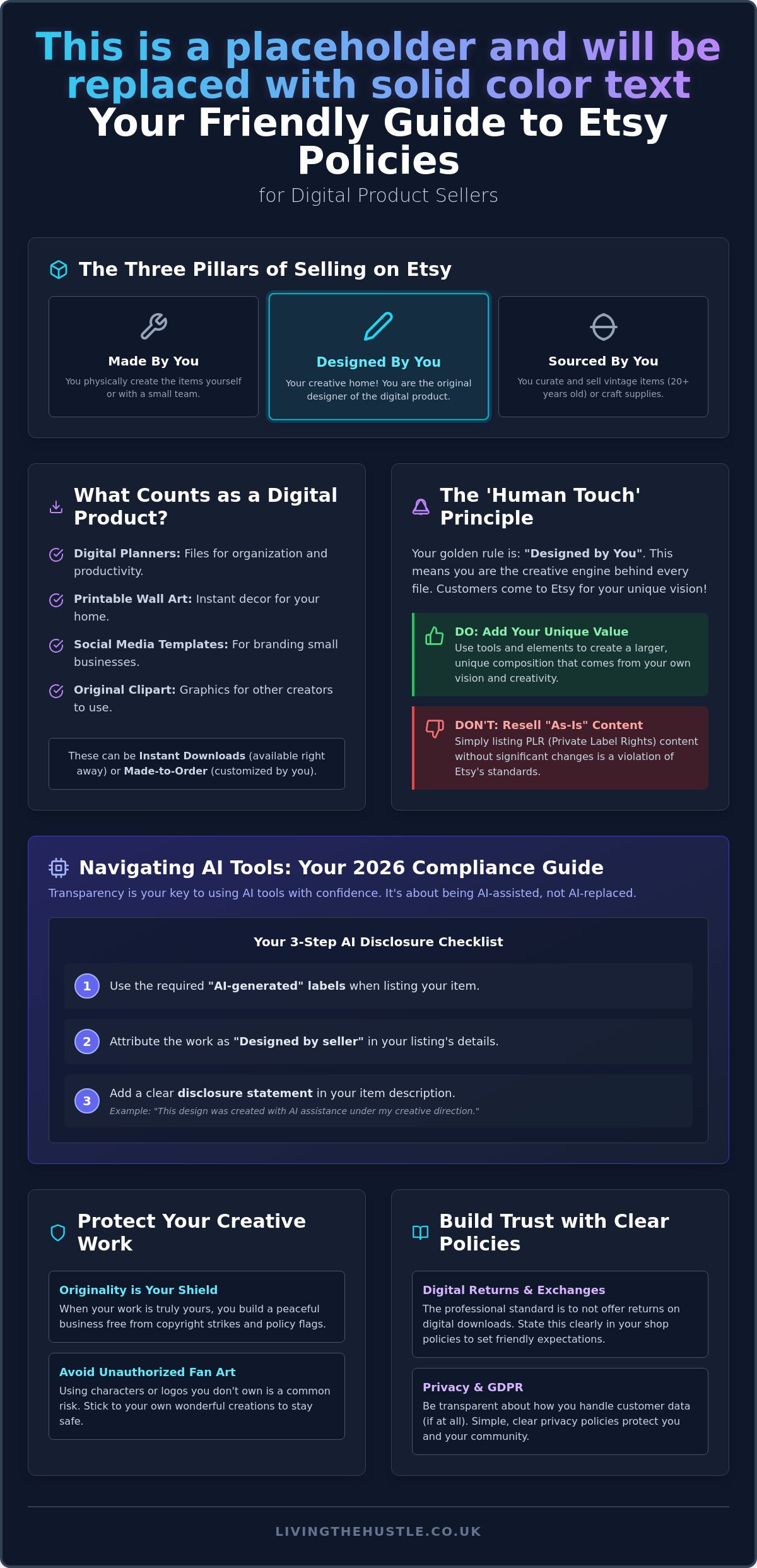
Every item sold must fit into one of three pillars: it must be made, designed, or sourced by you. For digital sellers, the “designed by you” pillar is your home. It's where your original ideas take shape. When you follow these guidelines, you move from a place of uncertainty to a state of professional poise. Adopting a “Calm Creator” mindset means seeing compliance as the framework that protects your long-term business peace.
What Qualifies as a Digital Product on Etsy?
Digital products are intangible files delivered directly to a customer's device. They skip the post office. They arrive with a sense of instant gratification. Common examples include:
- Digital planners for organization and productivity.
- Printable wall art for instant home decor.
- Social media templates for small business branding.
- Original clipart and graphics for other creators.
You can offer these as “Instant Downloads,” which are available immediately after payment, or as “Made-to-Order” files that you customize before sending. A digital product is a seller-designed intellectual asset that provides immediate value or utility to the buyer.
The Core Seller Policy: Your Foundation for Growth
Think of the Seller Policy as the “House Rules” for a community of over 7 million sellers. These rules ensure that the marketplace remains a safe, vibrant space for everyone. Transparency is a key part of this. Even though you aren't shipping a physical box, Etsy requires you to be honest about your shop's location and your production processes. This honesty builds a bridge of trust with your customers. It's the simplest way to show you're a real person behind the brand.
Adopting a “Calm Creator” philosophy means seeing these rules as a protective framework. When you know you're compliant, you don't have to worry about sudden shop warnings or the stress of suspension. This quiet confidence allows you to focus on what matters: your growth. If you're looking for a structured path to navigate these rules while building your business, the Passive Income Society Course offers the gentle guidance you need to start your journey with peace of mind. Following the basics prevents the overwhelmed feeling that comes from trying to fix mistakes after they happen.
Understanding Etsy's Creativity Standards: The ‘Human Touch'
Etsy's heart beats for original creativity. When we talk about etsy policies for digital products, the phrase “Designed by You” is your golden rule. It means you are the creative engine behind every file. Whether it's a budget tracker or a floral invitation, the layout, color palette, and functionality should come from your vision. Why does this matter? Because customers come to Etsy for something they can't find in a big-box store. They come for your specific perspective.
This is why reselling “as-is” Private Label Rights (PLR) content is a direct violation of Etsy's standards. If you simply buy a pack of templates and list them without significant changes, you aren't adding value. You're just a middleman. Etsy wants creators, not just resellers. To truly flourish, you need to find your unique voice. This isn't just about following rules; it's about building a brand that customers recognize and love. Adding unique value to every digital file ensures you're building a business that lasts.
Using AI Tools: Staying Compliant and Transparent
Are you using AI to spark ideas or refine your work? In 2026, transparency is mandatory. Etsy now requires “AI-generated” labels for specific listings. The key is understanding the difference between being “AI-assisted” and “AI-replaced.” If you use AI to generate a base image but then heavily edit, compose, and add your own design elements, you're in the “AI-assisted” safe zone. However, simply prompting a bot and uploading the raw result is considered risky.
To stay compliant, you must disclose this in your listing. You should attribute the work to “Designed by seller” and add a clear statement in your description. A simple sentence like, “This design was created with AI assistance under the creative direction of the seller,” keeps your shop transparent. This honesty protects your reputation and keeps you aligned with etsy policies for digital products.
The Role of Originality in Passive Income
Originality is the secret to a peaceful business. When your work is truly yours, you don't have to worry about policy flags or copyright strikes. It's helpful to align your work with U.S. Copyright Office guidelines to ensure your intellectual property is protected from the start. Original designs lead to better reviews because buyers can sense the care you put into the work.
If you use tools like Canva, remember that their elements are meant to be part of a larger, unique composition. Don't just place one stock illustration on a page and call it a day. Combine elements, change colors, and add your own typography to create something entirely new. If you want to dive deeper into this process, The Art of Design can help you learn to create products that truly stand out in a crowded market. If you're looking for a structured path to grow your shop with confidence, the Passive Income Society Course is a wonderful next step for your journey.
Intellectual Property and Licensing for Digital Sellers
Owning your work is the foundation of a peaceful shop. In the world of etsy policies for digital products, copyright is a simple concept: you own what you create from scratch. When you put your unique energy into a design, that intellectual property is yours. This ownership is what allows you to build a long-term, sustainable business. It's the “asset” in your digital asset business. Protecting these assets goes beyond just your designs. Keeping your business data secure is just as vital as protecting your art. Following the FTC guide to protecting personal information helps you maintain a professional, secure environment for your customers while you focus on your creative work.
One of the biggest risks to a calm business is the “Fan Art” trap. It's tempting to create products inspired by Taylor Swift or Disney because you know they're popular. However, using trademarked terms or characters without a license is a major violation. These brands have teams dedicated to finding and taking down unauthorized merchandise. A single takedown notice can cause a lot of stress and put your shop at risk. It's much better to focus on your own original themes. This keeps your business safe from legal headaches and allows your unique voice to shine.
Commercial vs. Personal Use Licenses
Do you want your customers to use your designs for their own projects, or are they allowed to sell items made with your files? Defining this is the difference between a personal use and a commercial use license. A personal use license means the buyer can't profit from your work. A commercial use license gives them permission to use your design in their own products, usually with specific limits. Clearly stating these terms in your listing images prevents confusion. When your rules are easy to find, you'll notice a significant drop in customer support “noise” and repetitive questions.
Handling IP Infringement with Confidence
Finding your design on another person's shop can feel like a punch to the gut. It's natural to feel frustrated, but you can handle this with quiet confidence. Etsy has a formal DMCA (Digital Millennium Copyright Act) process for reporting “copycats.” You don't need to send an angry message. Simply follow the official steps to report the infringement. Using tools like eRank for Etsy Sellers allows you to monitor market trends safely and ensure you aren't accidentally stepping on existing trademarks yourself. If you're ready to master these rules and build a shop the right way, the Passive Income Society Course provides the structured path you need to grow without the overwhelm.
Privacy and Data Protection: Protecting Your Community
Do legal terms like GDPR make you want to close your laptop and walk away? You aren't alone. Many new creators feel a flash of panic when they hear about data protection. However, etsy policies for digital products are designed to be manageable once you strip away the jargon. As a digital seller, you are technically a “Data Controller.” This simply means you are responsible for the small amount of buyer information you receive, such as a name and email address, while you fulfill an order.
The “Golden Rule” of Etsy privacy is simple: never add a customer to your email list without their explicit consent. Even though you have their email address to send a file or answer a question, using it for marketing without an opt-in is a major violation. Respecting these boundaries isn't just about avoiding trouble. It's about building a brand that your community trusts. When buyers feel safe in your shop, they're much more likely to return for future purchases. Privacy is the foundation of a professional, peaceful relationship with your audience.
Writing a Simple, Compliant Privacy Policy
You don't need a law degree to create a solid privacy policy. Etsy provides a built-in tool in your shop settings that does most of the heavy lifting for you. A compliant policy only needs to mention three essential things: what information you collect, why you need it, and who you share it with. In most cases, you only share data with Etsy to complete the transaction. Using the standard template saves you time and ensures you meet the requirements for UK and global buyers without the stress of writing from scratch.
Communication Standards for a Peaceful Shop
Etsy's messaging system is for customer service, not for “spam” or unsolicited promotions. Keep your conversations focused on helping the buyer. If a customer requests a custom digital edit, handle the communication entirely within the Etsy Messages platform. This keeps a clear record of your helpfulness and protects you if a dispute ever arises. Staying within these guardrails prevents the “overwhelmed” feeling that comes from managing messy communication across different platforms.
Building these systems early allows your business to grow into a source of true tranquility. If you're ready to see how a structured approach can transform your results, read my Passive Income Society Review to discover how to scale your shop without the stress. Learning the right way to communicate with your buyers is a key part of the “Calm Creator” journey. By following etsy policies for digital products today, you're ensuring your shop remains a safe and welcoming space for years to come.
Setting Up Your Shop Policies: A Step-by-Step Gentle Guide
Setting up your shop policies is the final step in creating your calm creator foundation. It's where you draw the lines that protect your time and your creative energy. When your etsy policies for digital products are clear, you spend less time in your inbox and more time doing what you love. Let's walk through this process together, one manageable step at a time.
- Step 1: Open your Shop Manager and click on Settings, then select Policy Settings. This is your control center.
- Step 2: Define your Returns & Exchanges. For digital items, the standard is usually “no returns,” but we'll talk about how to phrase that with kindness.
- Step 3: Set clear expectations for delivery. Most digital sellers use “Instant Download,” so ensure your listings reflect this for immediate access.
- Step 4: Craft a helpful FAQ section. Think of this as your 24/7 customer service assistant that handles tech hurdles while you sleep.
- Step 5: Review and publish. Once you hit that button, you've officially built a professional, compliant foundation for your shop.
The ‘No Returns' Policy for Digital Downloads
Digital products are unique because they can't be “returned” in the traditional sense. Once a buyer has downloaded your file, they have the asset forever. It's perfectly acceptable, and even recommended, to state that you don't offer refunds. You can phrase this gently by saying, “Due to the digital nature of these items, I cannot offer returns or exchanges.” This clarity prevents “Cases” from being opened against your shop and protects your hard-earned rating.
However, there are times when a refund is the calm choice. If a customer accidentally buys the same file twice, a quick refund is a simple way to show empathy. It builds immense trust and often turns a frustrated buyer into a loyal, repeat customer. Being flexible in these rare moments helps maintain your peace of mind and a positive shop reputation.
Using FAQs to Automate Your Customer Service
A robust FAQ section is the secret to making your income truly passive. It answers the questions that would otherwise keep you tethered to your phone or computer. When you provide solutions upfront, you empower your customers to help themselves. Common questions you should address include:
- How do I unzip a compressed folder?
- Can I use these templates in the free version of Canva?
- What is the best paper to use for printing at home?
By addressing these tech hurdles before they become emails, you create a smooth experience for your buyers. If you're looking for more ways to build a shop with ease and structure, the Passive Income Society Course offers the guidance you need to scale without the stress. Setting up your etsy policies for digital products correctly today means more freedom and tranquility tomorrow. If you want to refine your creative skills further, The Art of Design can help you create the high-quality assets your customers will love.
Your Path to a Peaceful and Profitable Shop
You've taken the first steps toward building a business that honors your creativity and your peace of mind. By understanding the core etsy policies for digital products, you've moved from confusion to clarity. You now know how to handle AI disclosures with honesty and how to protect your intellectual property with confidence. These aren't just rules to follow. They are the foundation of a sustainable side project that grows at your own pace.
Are you ready to take this knowledge and turn it into a thriving, low-stress reality? You don't have to navigate this journey alone. Join thousands of students in the Passive Income Society and learn to build a business that supports your lifestyle, not drains it. This is your invitation to move forward with a structured path and a supportive community by your side. It is entirely possible to achieve your goals without sacrificing your well-being.
Ready to build your digital empire calmly? Join the Passive Income Society today! Your future as a calm creator starts with the small, brave choices you make today. You have the vision and the tools. Now, it's time to bloom with confidence.
Frequently Asked Questions
Can I sell AI-generated art on Etsy in 2026?
Yes, you can sell AI-generated art on Etsy in 2026, provided you follow the mandatory disclosure rules. You must select the “Designed by seller” option and include a statement in your description explaining that the work was created with AI assistance under your creative direction. This transparency ensures you remain aligned with current etsy policies for digital products while embracing modern tools.
Do I need a business license to sell digital products on Etsy?
Whether you need a business license depends on your specific local and national laws rather than Etsy's platform rules. Most new sellers start as sole proprietors or sole traders, but it's always a peaceful choice to check your local government's requirements for home-based businesses. Etsy itself only requires you to provide valid tax and identity information to open your shop doors and start selling.
What happens if someone steals my digital design?
If you discover that someone has stolen your digital design, you can use Etsy's official DMCA report form to request a takedown. This is a formal legal process that allows you to protect your intellectual property without needing to engage in stressful direct confrontations. Staying calm and following the structured reporting steps is the best way to maintain your shop's professional integrity and creative peace.
Is it legal to use Canva elements in my Etsy digital products?
You can legally use Canva elements in your digital products as long as you create a new, unique composition rather than reselling the elements as-is. This involves combining graphics, adding your own text, and changing layouts so the final file is your original design. Following these etsy policies for digital products ensures your templates are compliant and high-quality for your buyers.
Why doesn't Etsy allow returns for digital downloads?
Etsy doesn't allow returns for digital downloads because these products are intangible and cannot be sent back once accessed. Because a buyer receives the file immediately, the industry standard is to mark these items as non-refundable. Clearly stating this in your shop policies helps set expectations and prevents confusion or disputes after a sale is completed, keeping your customer service experience calm.
How do I make my Etsy shop GDPR compliant?
Making your shop GDPR compliant involves creating a clear privacy policy and never using customer emails for marketing without their explicit permission. You can use Etsy's built-in privacy policy tool to explain how you handle buyer data. Respecting these boundaries builds a foundation of trust with your global community and keeps your business running smoothly without any technical or legal overwhelm.
Can I sell the same digital product on my own website and Etsy?
You are absolutely free to sell the same digital products on your own website and Etsy at the same time. Etsy doesn't require exclusivity, which allows you to grow your brand across multiple platforms for better long-term stability. This multi-channel approach is a great way to reach more people while keeping your business manageable, diversified, and entirely under your control.
What are Etsy's creativity standards for 2026?
Etsy's 2026 creativity standards emphasize that every digital item must be designed by the seller. This means you must be the creative force behind the layout, function, and aesthetic of the file. These standards, updated in late 2025, reinforce the “Human Touch” mission by ensuring that the marketplace remains a home for original, seller-led work rather than simple reselling.