

What if your next big project didn't require a single late night or a caffeine-induced panic attack? A 2023 report from MBO Partners found that 64 percent of side hustlers cite uncertainty as their biggest hurdle, often staying stuck in the idea phase because they think launching must be aggressive. You might worry that the market is too saturated or that you lack the tech skills to compete. It's completely normal to feel this way when you're balancing a busy life. However, creating a clear digital product launch plan doesn't have to be a source of stress.
You likely believe that building a business should offer you more freedom, not more items on a never-ending to-do list. I agree that your well-being is just as important as your profit margins, which is why you might want to visit The Holistic Life-Hub to learn about holistic health and maximizing your nutrient uptake for better energy. In this guide, you'll discover how to launch your digital product with total confidence using a gentle framework designed for creatives. We're going to break down every milestone so you can finally make that first sale on Etsy or your own site. We'll explore a manageable roadmap for 2026 that replaces social media overwhelm with purposeful, calm action.
Key Takeaways
- Say goodbye to “winging it” and discover how a structured digital product launch plan builds your confidence while eliminating the feeling of overwhelm.
- Learn how to use keyword research and the “Minimum Viable Product” approach to validate your ideas and create with purpose, not perfectionism.
- Master the art of building “gentle buzz” through social media storytelling and waitlists to secure an excited “Day 1” audience for your shop.
- Follow a simple launch day checklist to optimize your Etsy SEO and test your buyer’s journey for a seamless customer experience.
- Find out how to turn your initial launch into a sustainable, evergreen passive income stream by analyzing your data and making smart pivots.
What is a Digital Product Launch Plan? (The Calm Definition)
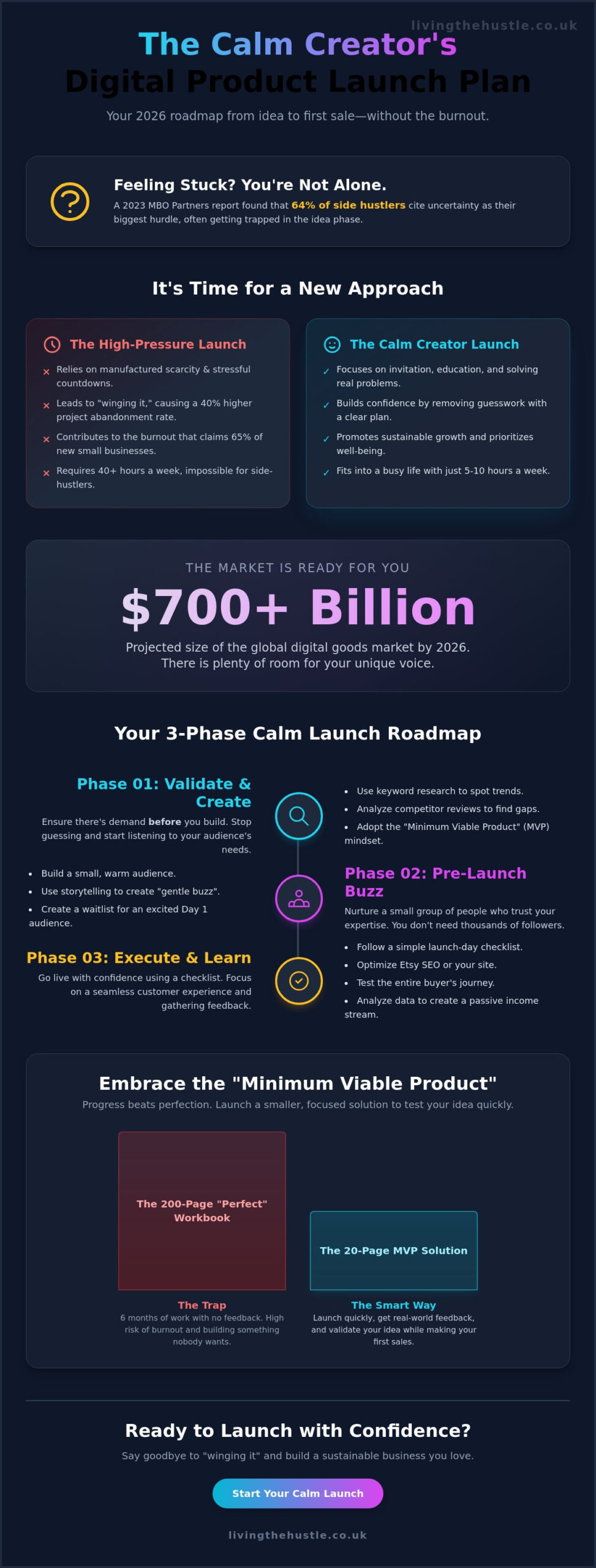
A digital product launch plan isn't a rigid set of rules that forces you to work until your eyes blur. It's a gentle roadmap from a raw idea to a live, profitable product. Think of it as a series of small, manageable steps that lead you toward a successful release without the frantic energy of a traditional “hustle” environment. By the year 2026, the digital goods market is projected to exceed $700 billion globally, meaning there's plenty of room for your unique voice to shine without needing to scream to be heard.
Many creators fall into the trap of “winging it.” They create a product in a vacuum and then post a single link on social media, hoping for the best. This approach usually leads to a 40% higher rate of project abandonment because the overwhelm becomes too heavy to carry. A plan builds your confidence by removing the guesswork. It allows you to follow the new product development process at your own pace, ensuring every technical detail is handled before you ever hit the “publish” button.
The biggest difference between a high-pressure launch and a calm creator launch is the intention. High-pressure launches rely on manufactured scarcity and 24-hour countdown timers that leave everyone exhausted. A calm launch focuses on invitation and education. It's about showing your audience how your product solves their specific problem, rather than pushing them into a corner. When you build your blog brand without the overwhelm, your launch becomes a natural extension of your helpfulness, not a stressful sales pitch.
Setting realistic goals for 2026 is vital for your mental health. Your first launch isn't just about the money; it's about proof of concept. If you aim to gain your first 50 email subscribers or receive three pieces of honest feedback, you've succeeded. These milestones are the foundation for a business that lasts years, not just weeks.
The Core Components of a 2026 Launch Strategy
- Market validation: Spend time ensuring there is a demand before you create. This might involve a simple poll or looking at search trends to confirm people are actually looking for your solution.
- The pre-launch phase: This is about building a small, warm audience. You don't need thousands of followers; you just need a handful of people who trust your expertise.
- The execution phase: These are the technical steps to go live. Having a checklist prevents the 2 a.m. panic over broken checkout links or missing download files.
Why Side-Hustlers Need a “Calm” Approach
Most side-hustlers are balancing jobs, families, or studies. You don't have 40 hours a week to dedicate to a “big reveal.” A calm digital product launch plan allows you to fit your business into 5 to 10 hours a week. This sustainable pace prevents the burnout that claims 65% of new small businesses within their first three years. You can move slowly and still reach your destination.
Phase 1: Validating and Creating with Purpose
Building a digital product launch plan shouldn't feel like throwing darts in the dark. It starts with quiet confidence and a bit of data. In 2026, the most successful creators are those who stop guessing and start listening. Validation is the antidote to the fear that your product won't sell. By the time you start designing, you should already know there is a group of people waiting for your solution.
Market Research Without the Overwhelm
You don't need a degree in data science to understand what your audience wants. Start by performing market research and competitive analysis to see where the current demand lies. For those selling on Etsy, using eRank for Etsy sellers is a game changer for spotting trending niches before they get too crowded.
Don't just look at what is selling; look at what isn't working. Analyze the reviews of your competitors. If 35% of customers complain that a digital planner is too cluttered or difficult to print, your path is clear. You can create a minimalist, printer-friendly version that solves that specific pain point. You can also survey your small circle or social media followers. Even ten honest responses from your target audience can save you weeks of wasted effort. Focus on these three areas:
- Identify the gap: What are people asking for in comments and reviews?
- Spot the trend: Use tools to see search volume for specific keywords.
- Listen to your circle: Ask your followers what their biggest daily hurdle is.
Design Tips for Non-Designers
Progress beats perfection every single time. The “Minimum Viable Product” (MVP) approach isn't about being lazy; it's about being smart. Instead of spending six months building a 200-page workbook, start with a 20-page version that solves one specific problem. This allows you to test your digital product launch plan in the real world without burning out.
Canva remains the leading tool for creators in 2026 because it balances professional results with an easy learning curve. Keep your designs simple. Clean layouts and readable fonts will always outperform over-designed, messy graphics. Branding consistency matters because it builds professional trust; even for your very first product, a unified look tells the buyer you are a serious creator. If you want to dive deeper into aesthetics, The Art of Design is a great resource for learning how to stand out. When you focus on the solution your product provides, the creative process feels lighter. You aren't just making “stuff”; you are helping someone overcome a hurdle. This shift in mindset turns a stressful task into a purposeful project. If you feel stuck on the visual side, you can build your blog brand without the overwhelm to get your foundations right first.
Phase 2: Building Buzz and Branding Your Business
Transitioning from the design phase to the sharing phase is where many creators feel the most friction. Your digital product launch plan doesn't need to be a source of overwhelm or an aggressive marketing blitz. Instead, think of it as inviting your audience into your creative studio. Share the behind the scenes journey on Pinterest and Instagram. Post a short video of your cursor moving in Canva or a time-lapse of your digital painting. This “Coming Soon” vibe builds genuine curiosity without the pressure of a hard sell.
A waitlist is your secret weapon for a stress-free launch. By collecting emails early, you ensure a “Day 1” audience that is already excited to buy. Data from 2024 industry reports shows that email marketing still sees an average ROI of $36 for every $1 spent. Start small by offering a sneak peek or a 10% discount to anyone who joins the list before the doors open. This builds a pool of warm leads who are ready when you hit publish.
Your product needs to look real to build trust. Create Etsy mockups that stop the scroll by showing the product in a lifestyle setting. If you're selling digital planners, show them on a clean desk with a cup of coffee. High-quality visuals prove that your work is professional and functional. Use these tips to build your visual assets:
- Use consistent lighting: Ensure all your mockups have a similar brightness and tone.
- Show the details: Include a close-up shot of the most important features.
- Focus on the benefit: Show the product in a way that solves the customer's problem.
Don't underprice your hard work. Look at competitors for a baseline, but focus on the value you provide. A $15 digital tool that saves someone 5 hours of manual work is a massive bargain. Aim for a price point that supports long-term profit and reflects your expertise. Pricing for profit allows you to reinvest in your business and keep your creative hustle sustainable.
Branding Your Launch Calmly
Your visual identity should feel like a deep breath. Use a soft color palette and consistent fonts to reflect your “Calm Creator” persona. This consistency builds instant recognition. Your personal story is the secret sauce that helps you stand out. It’s why people buy from you instead of a big corporation. You can learn more in our guide on building your brand without the overwhelm.
Content Planning for the Pre-Launch
Planning ahead prevents panic. Use the Calm Creators Content Planner to map out 14 days of posts. Focus on education and anticipation. Explain how your product solves a specific problem. Share a testimonial or a “did you know” fact. Set up automated emails to nurture your waitlist while you sleep. This ensures the work is done before the launch even starts.
Phase 3: The Gentle Launch Day Checklist
Launch day has arrived. It is the moment your vision meets the marketplace. While it feels like a high-pressure event, your digital product launch plan is designed to keep things manageable. The goal is a steady, calm rollout rather than a frantic scramble. Start by finalizing your Etsy listing. Precision matters here. Etsy allows for 13 tags; you should use every single one to maximize your reach. Data from 2024 marketplace studies shows that listings with complete attributes and all 13 tags see a 20 percent higher visibility rate in search results compared to incomplete listings. Write a description that focuses on the transformation your product offers, not just the technical specs.
Before you shout from the rooftops, test the buyer journey. Create a 100 percent off coupon code in your Etsy dashboard and “buy” your own product. This simple step ensures the PDF delivers correctly and the template links are active. It provides the confidence you need to move forward without tech-related anxiety. When it comes to launch day nerves, remember that the “refresh” button is not your friend. Whether you see five sales or zero in the first few hours, you have already succeeded. You've moved from an idea to a live product, which is more than most people ever do.
The Technical Go-Live Checklist
- Step 1: Finalize the Upload. Double-check that your final PDF or instruction file is attached to the Etsy listing. Ensure any external links to Canva or Google Drive are set to “anyone with the link can view.”
- Step 2: Activate Etsy Ads. If you have a small marketing budget, start with a 2 dollar daily limit. This helps gather initial search data and gets your product in front of shoppers while your organic SEO starts to kick in.
- Step 3: Notify the Waitlist. Send your “We Are Live” email to the people who signed up during Phase 2. Use a direct subject line like “It's here: [Product Name] is officially open!”
- Step 4: Monitor the Inbox. Stay available for the first 2 hours to answer customer questions. Quick responses during launch day can turn a hesitant browser into your very first five-star reviewer.
Post-Launch: The First 48 Hours
The 48 hours following your launch are about gathering momentum and feedback. Reach out to your first few buyers with a personal, non-pushy message. Ask if they found the download process easy or if they have any questions about using the product. This proactive approach often results in early reviews that build social proof for future customers. Celebrate this win. You've officially published your work, and that is a massive milestone regardless of the initial numbers. This launch day is just the beginning of your long-term passive income journey.
Scaling Your Passive Income Society
You've successfully finished your first launch. Take a deep breath and celebrate this milestone. This is where the real magic happens. Your initial digital product launch plan wasn't just about making sales today; it was about building a solid foundation for your future freedom. Now, you get to transition from “launch mode” into “growth mode” with a sense of calm and clarity.
Start by looking at your data with curiosity rather than judgment. Numbers tell a story about what your audience truly needs. Focus on these specific metrics to guide your pivot:
- Conversion Rate: Aim for 2% as a healthy baseline for your shop pages.
- Email Engagement: If your click-through rate was below 1.5%, try testing new subject lines in your next sequence.
- Traffic Sources: Identify if the majority of your 500+ monthly visitors are coming from search or social media.
Turning a one-time launch into an evergreen stream means automating your success. You can set up a simple three-part email sequence that triggers every time someone downloads your freebie. This keeps your shop running while you sleep. Once you have one product that works, creating the second one is much easier. You already have your brand colors, your listing templates, and a workflow that fits your life. Most successful creators in our community manage their entire inventory in just 4 hours a week by focusing on high-impact tasks and letting automated systems handle the rest.
Moving Toward Long-Term Passive Income
Success in this space is about longevity and sustainable growth. Read our Passive Income Society Review to see the full path others have taken to reach their goals. One of the best ways to keep traffic flowing is through Pinterest. A single pin can drive visitors to your shop for 12 months or more, creating a 24/7 sales cycle without the pressure of constant social media posting.
If you're ready to level up your shop, consider exploring high-demand, advanced niches. You might dive into the creative world of Junk Journals or create seasonal Party Printables. These niches have dedicated fan bases that look for new designs all year round.
Your Next Gentle Step
Don't let your momentum fade into overwhelm. Your next goal is simple: plan your second product within the next 30 days. You don't need to reinvent the wheel. Use what you learned from your first digital product launch plan to make the process even smoother this time. Staying connected with a community of like-minded creators will keep your spirits high and your motivation steady. Ready to scale? Join the Passive Income Society to scale your dream shop with confidence and purpose.
Your Path to a Calm and Profitable 2026
Building a business doesn't have to feel like a race against a ticking clock. You've now seen how a 3-phase digital product launch plan can transform your big idea into a sustainable reality without the typical burnout. By focusing on validating your product with purpose first, you ensure your 2026 goals are rooted in what customers actually need. We've covered how to build buzz gently and manage your launch day with a 12-point checklist that keeps panic at bay. Whether you're a total beginner or a creator with 5 years of experience, these proven strategies for Etsy and independent shops prioritize your well-being. It's about creating a business that serves your life, not the other way around. You don't need to guess your way through the process when you have step-by-step guidance to follow; it's about no guesswork, just results.
Ready to build your digital empire? Explore the Passive Income Society today!
Your journey toward a calm, profitable empire starts with one small, intentional step today. You've got the tools and the talent to make this happen.
Frequently Asked Questions
How long does it take to plan a digital product launch?
A sustainable timeline for your first launch typically spans 4 to 8 weeks. You should dedicate 2 weeks to market research, 3 weeks to product creation, and the final 3 weeks to your marketing sequence. This methodical approach prevents burnout and ensures you have enough time to test your checkout process before going live.
Can I launch a digital product with zero followers?
Yes, you can absolutely launch successfully by leveraging established marketplaces like Etsy or using Pinterest SEO to find buyers. Etsy currently has over 90 million active buyers who are already looking for solutions. You don't need a massive social media presence when you tap into existing search traffic where customers are ready to purchase.
How much money do I need to start a digital product business in 2026?
You can start your digital product journey for less than $50 by using free design tools and low-cost hosting. Canva offers a robust free tier for creating your files, while Etsy only charges a $0.20 listing fee per item. This low barrier to entry allows you to start your digital hustle without financial stress or heavy upfront investments.
What is the best platform to launch a digital product for beginners?
Etsy is the best platform for beginners because it handles the technical heavy lifting like payment processing and file delivery. It's a gentle way to start because you don't have to build a website from scratch. Using a solid digital product launch plan within the Etsy ecosystem helps you show up in search results and reach customers immediately.
How do I know if my digital product idea will actually sell?
You can verify your idea by using SEO tools like eRank or Marmalead to check for high search volume and low competition. Look for keywords that have at least 1,000 monthly searches. This data-driven approach removes the guesswork and gives you the confidence that people are actively searching for the solution you're providing.
What happens if my digital product launch fails?
A quiet launch is simply a data point that helps you pivot your strategy for next time. Industry data suggests that 70 percent of first-time products require one round of updates to their SEO or listing images to find their rhythm. It isn't a failure; it's a gentle invitation to refine your message and try again with more clarity.
Do I need to be a graphic designer to create digital products?
You don't need a design degree because modern tools like Canva provide professional templates that you can customize easily. Approximately 60 percent of top-selling digital creators are self-taught and use simple, clean layouts to help their customers. Focus on being helpful rather than being perfect, and your audience will appreciate the value you provide.
How do I protect my digital products from being stolen or copied?
You can protect your work by flattening your PDF files and including a clear “Terms of Use” page in every download. Including these security steps in your digital product launch plan ensures your intellectual property stays safe. For extra peace of mind, you can register your work with the U.S. Copyright Office to have legal standing if a dispute arises.