

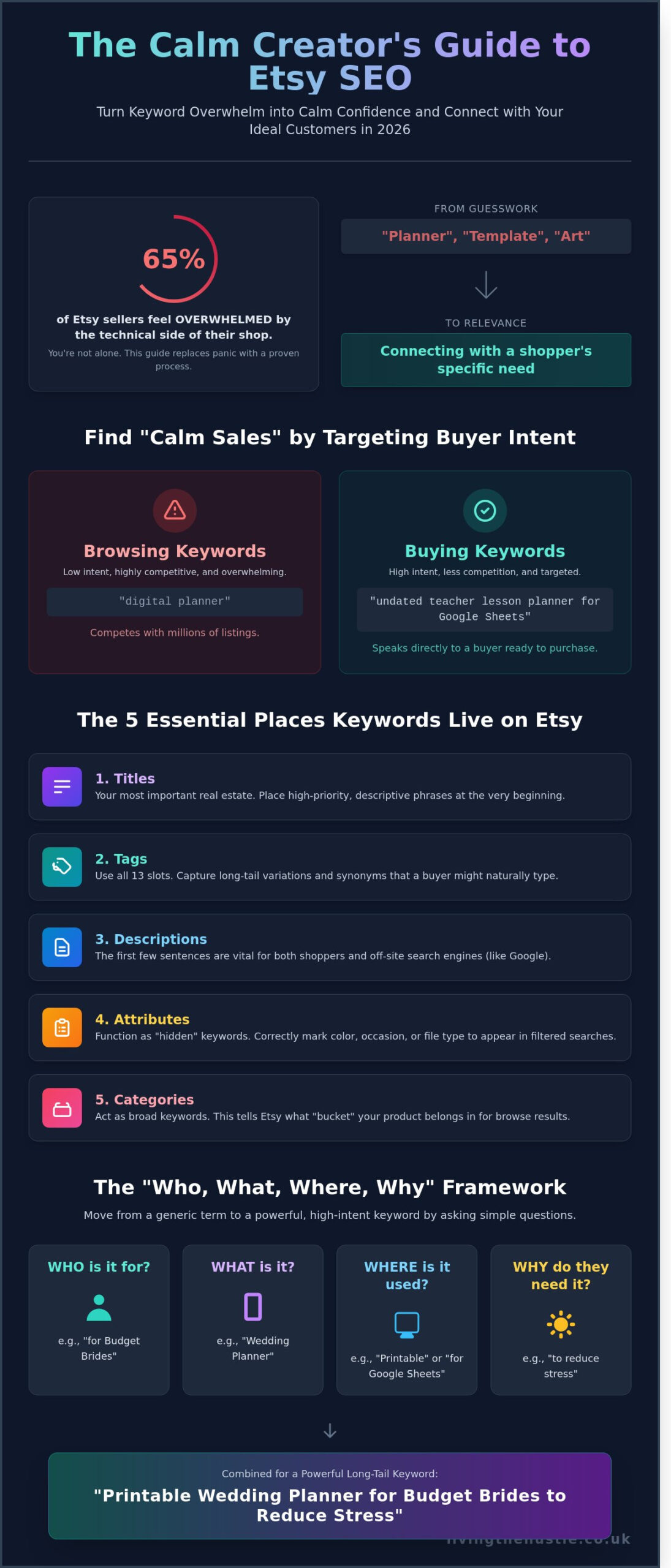
What if your Etsy SEO strategy didn't have to feel like a high-stakes math exam every time you want to list a new product? Let's be honest; it's incredibly easy to feel stuck when you're staring at a screen full of jargon. This etsy keyword research guide is designed to replace that guesswork with a sense of calm confidence. According to a 2023 Etsy seller survey, 65% of creative entrepreneurs feel overwhelmed by the technical side of running their digital shop. You aren't alone in that feeling of panic, but there is a more sustainable way to grow.
I understand that fear of wasting hours on a digital planner or template that nobody ever sees. You deserve to know that your hard work will actually reach the right people. By following this gentle, step-by-step approach, you'll learn how to find high-demand, low-competition keywords without the stress. We'll build a manageable research routine that helps you uncover hidden gems and ensures your digital products thrive in 2026.
Key Takeaways
- Shift your perspective on SEO by learning how to connect your unique digital creations with a shopper’s specific needs through relevance rather than guesswork.
- Use this etsy keyword research guide to build a personalized list of high-demand phrases using a gentle “Who, What, Where, and Why” brainstorming framework.
- Uncover the power of long-tail keywords to help you compete with confidence and attract “calm” sales away from overcrowded, broad categories.
- Follow a manageable step-by-step workflow to validate your ideas with data, ensuring your shop builds momentum without the usual overwhelm.
- Learn how to write “Calm Titles” that welcome human shoppers and implement a gentle tag refresh strategy to keep your listings performing at their best.
Understanding Etsy Keyword Research Without the Overwhelm
Let's be honest; the term “SEO” often makes creative hearts sink. You want to spend your time designing beautiful digital products, not staring at confusing spreadsheets. Think of keyword research as a bridge. It's the gentle path that connects your creative work to a shopper who has a very specific need. In 2026, the secret to success isn't about “stuffing” as many words as possible into a box. It's about relevance and buyer intent. Understanding search engine optimization is simply about learning to speak the same language your customers use when they're looking for help. This etsy keyword research guide is here to show you that SEO can be a calm, manageable part of your creative process.
Many sellers feel discouraged by the “saturation myth.” As of late 2023, Etsy reported over 9 million active sellers, which sounds intimidating. However, specific keywords help you find your unique corner of that massive market. When you target niche phrases, you stop competing with millions and start talking to the exact person who needs your specific digital solution. We call this “Calm SEO.” It's about doing the right research once so your shop can grow passively while you're busy focusing on your craft or spending time with family.
Why Keywords are the Heart of Your Etsy Shop
Etsy's search algorithm works like a digital matchmaker. It looks at your keywords to decide if your listing is the right answer to a buyer's question. There's a major difference between “browsing” and “buying” keywords. A browsing phrase like “digital planner” is low intent and very crowded. A buying phrase like “undated teacher lesson planner for Google Sheets” shows high intent. These specific shoppers are ready to purchase right now. By following this etsy keyword research guide, you can focus on these high-conversion phrases. To simplify this process, you might explore tools like eRank for Etsy sellers to find these hidden gems without the guesswork.
The 5 Essential Places Keywords Live on Etsy
Keywords don't just belong in your title. They should be woven throughout your listing in these five key areas:
- Titles: This is your most important real estate. Place your high-priority, descriptive phrases at the very beginning where they are easiest to read.
- Tags: You have 13 slots available. Use every single one to capture long-tail variations and synonyms that a buyer might naturally type.
- Descriptions: The first few sentences are vital. They impact both off-site search engines and the shopper's decision to stay on your page.
- Attributes: These function as “hidden” keywords. Correctly marking the color, occasion, or file type helps Etsy's filters show your products to the right people.
- Categories: These act as broad keywords that tell Etsy exactly what “bucket” your product belongs in, ensuring it appears in the correct browse results.
The Calm Creator’s Framework for Brainstorming Keywords
Keyword research doesn't have to be a source of stress. Instead of chasing every trending term you see on social media, start with a “Brain Dump.” Grab a notebook and write down every possible way a customer might describe your digital product. Don't filter yourself yet. If you're creating a budget tracker, people might call it a “finance sheet,” a “money manager,” or even “debt payoff printable.” This etsy keyword research guide is designed to help you move with purpose, not panic. When you approach ideation with a calm mind, you'll notice that your own life experiences are your best assets. For instance, if you struggled to organize your home office in 2024, chances are at least 12% of other creative entrepreneurs are currently searching for that exact organizational solution. Your unique perspective allows you to spot emerging digital trends before they become oversaturated.
To narrow your focus, use the “Who, What, Where, and Why” method. A generic “Wedding Planner” is incredibly hard to rank for because it's too broad. However, a “Wedding Planner for Budget Brides” targets a specific need and a specific person. Think about the “Why” behind the purchase. Is the customer trying to save time, reduce stress, or learn a new skill? By focusing on the intent behind the search, you are building a sustainable shop that serves real human needs rather than just chasing algorithms. This method ensures your products aren't just beautiful; they're functional and findable for the people who need them most.
Step 1: Identifying Your Seed Keywords
Seed keywords are the foundation of your SEO. These are simple 1-2 word phrases that define your niche. Think of them as the broad categories Etsy uses to understand your shop. For digital sellers, common seeds include “Canva template,” “printable art,” or “budget tracker.” Identifying these early helps in building your brand without the overwhelm. Once you have your seeds, you can branch out into more specific, less competitive phrases that attract your ideal customer.
Step 2: Using Etsy Autosuggest for Real-Time Insights
The Etsy search bar is a free, powerful tool that reflects what over 90 million active buyers are actually searching for. To use it effectively, try the “Alphabet Method.” Type your seed keyword into the search bar, then type the letter “a”. Note the suggestions. Repeat with “b”, “c”, and so on. These suggestions are gold because they represent high-volume, current searches. If Etsy suggests “Canva template for real estate” when you type “Canva template r”, it means there is significant demand for that specific item. It's a direct window into the customer's mind. If you find yourself needing more structure as you plan your shop's future, you might find the Calm Creator’s Content Planner helpful for keeping your ideas organized as you grow. This simple etsy keyword research guide step removes the guesswork and replaces it with data-driven confidence.
Long-Tail Keywords: The Secret to Competing with Confidence
Do you ever feel like your shop is a tiny boat in a massive, stormy ocean? If you only target broad keywords, that's exactly how it feels. Broad terms like “planner” or “art” are incredibly crowded. In 2024, a search for “digital planner” returned over 400,000 results on Etsy. Trying to rank for that as a beginner is a recipe for overwhelm. This is why our etsy keyword research guide focuses on the power of the long-tail phrase. It's the most effective way to find a peaceful, profitable niche.
Long-tail keywords are phrases that contain three or more words. They are specific, targeted, and much quieter than high-traffic “head” terms. When you use these, you aren't shouting into a crowd; you're having a direct conversation with a buyer who knows exactly what they want. This approach leads to “calm” sales because the competition is lower and the buyers are more motivated to click “add to cart.”
Broad vs. Long-Tail: Why Specificity Wins
Specificity is your best friend when you want to stand out without needing thousands of reviews. According to Etsy's official keyword guide, using specific phrases is the most effective way to help the algorithm match your products with the right audience. Here is how the two types of keywords compare in the real world:
| Keyword Type | Example | Competition Level | Conversion Rate |
|---|---|---|---|
| Broad | “Digital Planner” | Extremely High | Lower |
| Long-Tail | “Dark Mode ADHD Digital Planner” | Low to Medium | Much Higher |
Decoding Buyer Intent in 2026
By 2026, shoppers are using even more conversational language. They don't just search for “labels.” They search for “how to organize small kitchen printable.” This signals a specific problem-solving need. When you identify these phrases, you're finding people who are at the very end of their buying journey. They have a problem, and they're looking for your digital product to solve it right now. You can map out these specific ideas using the Calm Creators Content Planner to ensure your shop stays organized and purposeful.
Aesthetic keywords are also rising in importance. Shoppers want products that match their personal style. Consider these types of phrases for your 2026 strategy:
- Problem-Solving: “homeschool schedule for multiple kids”
- Aesthetic-Focused: “minimalist boho wall art” or “sage green habit tracker”
- Event-Specific: “modern 30th birthday invite template”
When you follow this etsy keyword research guide strategy, you stop competing on price and start competing on relevance. It's a much gentler way to grow your business with confidence.
A Step-by-Step Workflow for Your Etsy Keyword Research
Turning your creative ideas into a profitable shop doesn't have to feel like a high-pressure math exam. It's about finding a gentle rhythm that balances what people are searching for with what you love to create. This etsy keyword research guide follows a repeatable four-step workflow designed to keep you focused and calm as you build your digital product empire.
- Step 1: Start by gathering your initial list of 20 to 30 brainstormed phrases. Don't worry about being perfect at this stage. Just get your ideas onto paper or into a simple spreadsheet.
- Step 2: Use a tool like eRank to check the search volume and competition for each phrase. You're looking for data that tells a story about what shoppers actually want.
- Step 3: Filter your list for “Green” or high-opportunity keywords. These are the sweet spots where monthly search volume is healthy, often over 500 searches, but the competition is manageable for a new or growing shop.
- Step 4: Select your primary keyword for your title and 13 supporting tags. This ensures your listing is visible to the right people at the right time.
Validating Your Ideas with eRank
If you're feeling a bit lost in the data, using eRank for Etsy Sellers is a fantastic way to regain your confidence. When you open the Keyword Tool, it provides clear bar charts showing search trends over the last 12 months. This allows you to spot seasonal trends long before they arrive. For example, if you see “budget planner” searches beginning to spike every October, you can start your design process in August. This 60-day head start means you'll be ready when the rush begins. It's about working with purpose, not in a state of panic.
Analysing Competitor Tags with Purpose (Not Panic)
Take a quiet moment to look at the top 10 best-selling listings in your specific niche. What words are they using in their titles? You can often see their tags at the very bottom of the listing page. Use these as inspiration for your own unique spin. It's important that you don't copy tags exactly; your shop needs its own voice to stand out. Look for the gaps they might have missed. If 85% of your competitors are using the broad tag “digital planner,” but none are using “undated floral daily organizer,” you've found a golden opportunity. Identifying these small gaps allows you to serve a specific audience that isn't being reached yet.
Ready to turn your research into beautiful designs that sell? Explore The Art of Design to learn how to create digital products that truly stand out in the marketplace.
Implementing Your Research to Build a Sustainable Shop
Success on Etsy doesn't happen overnight, and that's okay. Think of this etsy keyword research guide as your roadmap for a journey, not a sprint. Once you've identified your profitable niches, the next step is applying that data with a sense of calm and purpose. You don't need to overcomplicate things. SEO is a slow burn; it typically takes 30 to 90 days for Etsy's algorithm to fully understand where your listing fits. Giving your research time to breathe is the best gift you can give your new shop.
Keyword research is a skill that evolves. With every listing you create, you'll find it gets easier and more intuitive. You'll start to “see” keywords in your daily life, noticing how people describe their problems and what solutions they're looking for. This isn't about gaming a system. It's about becoming a better communicator so the right people can find the beautiful digital products you've worked so hard to create.
Writing Titles and Tags That Convert
A “Calm Title” is one that balances search engine needs with human readability. Use the front-loading technique by placing your most descriptive, high-value phrase at the very beginning of your title. This is the first thing a shopper sees in search results. For example, if you're selling a meal planner, start with “Digital Meal Planner” rather than “Instant Download PDF.” It's clear, direct, and tells the customer exactly what they're getting.
- Maximize your 13 tags: Use every single slot Etsy provides. Each tag is a new entry point for a customer to find you.
- Avoid repetition: You don't need to repeat words across tags. If “Planner” is in one tag, use “Organizer” or “Schedule” in another to broaden your reach.
- The Tag Refresh: If a listing hasn't gained traction after 30 to 60 days, gently update the tags. Check your Etsy search terms to see what actual phrases led people to your shop and swap out the underperforming ones.
Your Gentle Next Steps for Growth
Don't let the technical side of SEO lead to overwhelm. Your only job today is to take one small step. Start with just one listing. Use the keywords you've found and see how it feels to hit that “publish” button. By following this etsy keyword research guide, you're building a foundation that supports your creativity instead of stifling it. Momentum is built through these small, consistent actions rather than giant leaps that lead to burnout.
If you're feeling ready to move beyond the basics and want a supportive community to help you scale, the Passive Income Society offers a deeper dive into building a business that lasts. You have something beautiful to share; keywords just help people find it. Trust your research, stay patient, and keep creating with heart.
Take Your Next Gentle Step Toward Etsy Success
Building a profitable shop doesn't have to feel like a frantic race against the algorithm. By focusing on long-tail keywords and following a methodical workflow, you can bypass the noise and connect with buyers who are actually looking for your digital products. This etsy keyword research guide is designed to replace your overwhelm with a clear, repeatable strategy for 2026. You've learned how to identify high-intent phrases and how to implement them without the typical stress of hustle culture.
Success on Etsy is about sustainable growth, not overnight miracles. We've already helped over 5,000 students navigate this path by breaking down complex SEO into simple, manageable steps for total beginners. You don't need to be a tech expert to see results; you just need a calm plan and the right support system to keep you moving forward.
Ready to build your shop with confidence? Join the Passive Income Society and let's turn your digital ideas into a calm, profitable business together. You've got the tools and the talent to make this happen. It's time to start your digital journey with purpose and peace of mind.
Frequently Asked Questions
Is it too late to start an Etsy shop in 2026?
No, it's definitely not too late to start. Statista reports that the global digital goods market is projected to reach 800 billion dollars by 2027, showing there's plenty of room for new creators. Etsy's own buyer base reached over 90 million active shoppers in late 2024, and that number continues to climb. Starting your journey now with a solid etsy keyword research guide allows you to build a sustainable business in a growing marketplace.
How many keywords should I use in my Etsy title?
You should aim to use 3 or 4 high-quality, long-tail keyword phrases in your listing title. While Etsy allows a maximum of 140 characters, mobile devices often truncate titles after the first 40 characters. It's vital to put your most important, descriptive keywords at the very beginning so shoppers know exactly what you're offering. This keeps your shop looking professional and helps you avoid a cluttered, spammy appearance.
Do I really need to use all 13 tags on every listing?
Yes, you should use every single one of the 13 tags provided by Etsy. Each tag is a fresh opportunity for the search algorithm to match your digital product with a customer's query. According to the Etsy Seller Handbook, using all 13 tags is a fundamental step in optimizing your visibility. Don't repeat words from your title in your tags; instead, use that space to include synonyms or specific use cases for your product.
Should I use the same keywords for all my digital products?
No, you should vary your keywords across different listings to reach a wider audience. If you use the exact same terms for every product, you end up competing against yourself in the search results. By following a clear etsy keyword research guide, you can find unique variations for each item. For example, if you sell planners, target “habit tracker” for one listing and “daily productivity log” for another to capture different types of buyers.
How long does it take for Etsy SEO to start working?
It typically takes 3 to 4 weeks for Etsy's algorithm to fully index your keywords and collect enough data to stabilize your ranking. Most experienced sellers suggest waiting at least 30 days before making any major changes to a listing's SEO. This timeframe gives the system a chance to see how shoppers interact with your product. Staying patient during this month-long window is an essential part of maintaining a calm and steady business growth strategy.
Are paid keyword tools like eRank or Alura worth the investment for beginners?
Paid tools are helpful, but they aren't a requirement when you're just starting out. Many beginners find success using the free versions of eRank or Alura, which offer a limited number of daily searches. You can also gather excellent data just by using the Etsy search bar's auto-suggest feature. Once your shop consistently generates profit, you can reinvest those earnings into a paid subscription to speed up your research process.
What is the best way to find trending digital product keywords?
The most effective method is to use the Pinterest Trends tool alongside Etsy's own search data. Pinterest Trends provides data on what users are looking for up to 6 months before a season begins, giving you a head start on your designs. On Etsy, look for the “Popular Now” or “In demand” badges that appear on specific search results. These indicators show you exactly what's selling in real-time, so you can create products with confidence.