
What if you could build a profitable creative business without the 2:00 AM panic or the need for a fine arts degree? You likely feel like the digital market is already too crowded, or maybe you're worried that creating digital art to sell on etsy requires expensive software you don't have the patience to learn. It's completely normal to feel overwhelmed by the technical side of things when you just want to create. With Etsy reaching a record 9.2 million active sellers by the start of 2026, the idea of “saturation” can feel like a giant barrier keeping you from even starting.
Let's change that perspective together. You don't need to be a professional designer to find your place; you just need a clear, manageable path. This guide will show you how to turn your creative spark into a gentle passive income stream that fits into your life rather than taking it over. We'll walk through the simple tools that make design accessible, how to bypass the fear of competition, and the exact steps to set up your shop with total confidence. It's time to start your digital hustle with purpose, not panic.
Key Takeaways
- Discover why digital products are the ultimate “calm hustle” for creating a sustainable stream of passive income in 2026.
- Learn how to use beginner-friendly tools like Canva to build high-quality designs even if you do not consider yourself a professional artist.
- Master the art of researching “hungry” niches and creating digital art to sell on Etsy that meets the growing demand for functional art.
- Follow a gentle, step-by-step workflow to move from a blank canvas to your first live listing without the typical tech overwhelm.
- Find out how to scale your creative shop into a thriving business while keeping your schedule light, manageable, and stress-free.
Why Digital Art is the Ultimate “Calm Hustle” in 2026
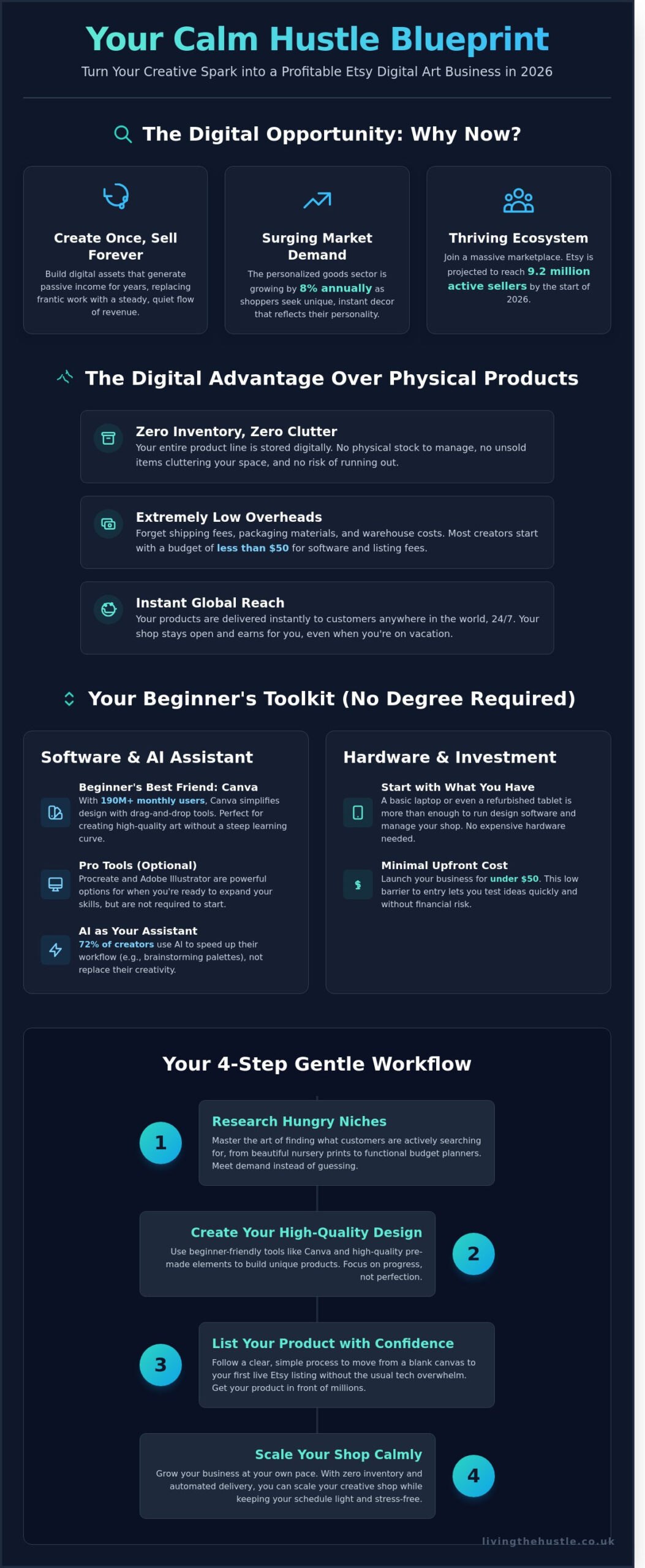
Digital art isn't just for gallery walls anymore. On Etsy, it's a thriving ecosystem of printable wall art, digital planners, intricate clipart, and editable templates. By 2026, the shift toward the “personalized home” has reached new heights. A 2024 study by Research and Markets projected the personalized goods sector would grow by 8 percent annually. This means shoppers are looking for unique, instant decor that reflects their personality without the carbon footprint of shipping.
The real magic lies in the “create once, sell forever” model. Unlike physical products where every sale requires packing and shipping, a digital file lives on the Etsy servers. You put in the creative work today, and it can generate revenue for years. This is the heart of creating digital art to sell on etsy; it's about building an asset that works for you while you sleep. It replaces the frantic 2 AM packing sessions with a steady, quiet flow of notifications.
Choosing a gentle approach prevents the burnout so common in physical retail. You aren't tied to a post office schedule or a supply chain. If you need to take a week off for your mental health, your shop stays open. The digital nature of the business means your “stock” never runs out, allowing you to scale without increasing your stress levels.
The Benefits of Going Digital
Starting a digital shop is incredibly accessible. You don't need a warehouse or a spare room filled with bubble wrap. Your inventory is stored on a hard drive. Most creators start with a budget of less than $50 for software and Etsy listing fees. This low barrier to entry allows you to test ideas quickly. You can reach a customer in Tokyo and another in New York at the exact same moment, all while sitting at your kitchen table.
- Zero Inventory: No more clutter or unsold physical stock.
- Low Overheads: No shipping costs or expensive packaging materials.
- Global Reach: Sell to millions of active Etsy buyers instantly.
Moving from Panic to Purpose
Let's be honest; the traditional “hustle” culture is exhausting. We're reframing it. You don't need a Fine Arts degree or expensive oil paints to succeed here. Success comes from understanding what people need, like a beautiful nursery print or a functional budget planner. If you want to refine your skills, The Art of Design can help you create products that stand out.
A “Calm Hustle” is a business that respects your time and mental space. It allows you to grow at your own pace without the pressure of physical inventory. When you focus on creating digital art to sell on etsy, you choose purpose over panic. You're building a sustainable future that honors your creativity and your need for peace.
Essential Tools for Creating Art (Even for Non-Artists)
Do you feel like you aren't “creative enough” to start? Let's clear that up right now. In 2026, the barrier to entry has never been lower. You don't need a fine arts degree to succeed at creating digital art to sell on etsy. Most top sellers began with nothing more than a laptop and a spark of an idea. Your journey should be about progress, not perfection.
Choosing your software is your first gentle step. While Procreate and Adobe Illustrator are wonderful, Canva remains the beginner’s best friend in 2026. By late 2025, Canva's user base reached over 190 million monthly active users because it simplifies complex tasks. It allows you to drag and drop curated elements to build something entirely new without the steep learning curve of professional suites. It's about working smarter, not harder.
What about the role of AI? Think of it as your digital creative assistant. Instead of letting a prompt do all the work, use AI to brainstorm color palettes or generate rough sketches you can refine. By 2025, data showed that 72% of digital creators used AI to speed up their workflow rather than replace their own input. It's a tool for efficiency that keeps your “hustle” feeling calm and manageable.
Hardware doesn't have to be a major expense. While an iPad and Apple Pencil are lovely for hand-drawn styles, they aren't a requirement for success. A basic laptop or even a refurbished tablet from 2024 will handle most design software perfectly. You can build a profitable shop without a massive upfront investment; start with what you have and upgrade as your shop grows.
Designing with Confidence
You don't have to draw every single line from scratch to be an artist. Using high-quality, pre-made elements is a smart way to maintain a consistent aesthetic. When you combine different graphics, textures, and fonts, you create a unique product that resonates with buyers. If you want to skip the guesswork, Clipart Shop Profits helps you build a professional shop with total confidence. Always check your licensing; ensure every element you use is cleared for commercial use to keep your business safe and stress-free.
The Art of Design Basics
Success in creating digital art to sell on etsy often comes down to simple choices. Stick to a palette of 3 to 5 complementary colors to keep your work looking cohesive. Typography also carries a lot of weight; a clean serif font paired with a playful script can make your art pop. For those who want to master these nuances, The Art of Design offers deeper insights into creating products that truly stand out. Finally, always offer your art in standard formats like 300 DPI JPEGs or transparent PNGs to ensure your customers get the best quality possible.
Finding Your Niche: What Digital Art Actually Sells?
Stop throwing spaghetti at the wall to see what sticks. In 2026, success in creating digital art to sell on etsy comes down to data, not just intuition. Many artists feel overwhelmed because they try to compete in broad categories like “abstract art” where millions of listings already exist. Instead, look for hungry markets where shoppers are ready to buy right now. By January 2026, 64% of top-performing digital shops focused on specific micro-niches rather than general categories.
The 2026 market has shifted heavily toward “functional art.” This means art that serves a specific purpose beyond just looking pretty. Educational posters for homeschoolers or interactive junk journal pages are seeing a 28% increase in search volume compared to standard prints. You don't have to sacrifice your creative soul; you just need to apply your style to a format people are actively seeking. Balancing what you love with what people need is the secret to a calm, sustainable business.
High-Demand Digital Art Categories
Nursery wall art remains a powerhouse, but the 2026 trend focuses on earthy minimalism and “slow living” themes. Parents are moving away from bright primary colors toward muted, calming palettes. If you want a niche with high profit margins and a dedicated community, explore Junk Journal Sales Secrets. These printable kits allow you to combine vintage textures with functional storytelling elements that customers collect obsessively.
- Printable Home Decor: Focus on gallery wall sets rather than single prints to increase your average order value.
- Party Printables: This is a year-round income strategy. Digital invitations and decor for “First Trip Around the Sun” or “Groovy One” birthdays are consistently high-volume searches.
- Educational Art: Alphabet charts and anatomy posters for playrooms are currently seeing a 15% year-over-year growth.
Researching Without the Overwhelm
You don't need to be a tech genius or a math expert to find what works. Tools like eRank allow you to see exactly what shoppers type into the search bar. Use eRank for Etsy Sellers to simplify your keyword research and identify “gaps” in the current market. A gap exists when a search term has over 2,000 monthly searches but the current results are outdated or low quality.
Look for listings that haven't been updated since 2023. If you see blurry listing photos or clunky designs, that is your invitation to enter the market with something better. When you start creating digital art to sell on etsy with a specific target customer in mind, the competition naturally fades away. It's about being the best solution for a specific person, not a mediocre solution for everyone.
Step-by-Step: From Blank Canvas to Your First Etsy Listing
Your creative journey starts long before you pick up a stylus. Creating digital art to sell on etsy is more sustainable when you build a “Calm Creator” workspace first. This means clearing physical clutter and organizing your digital folders by project type or collection. A tidy space reduces decision fatigue; it lets your brain focus entirely on the art. Set your lighting to a soft, warm glow and keep a glass of water nearby to maintain your focus during longer sessions.
When you are creating digital art to sell on etsy, the workflow follows three simple stages: sketch, refine, and export. Start with a rough digital sketch to capture the movement and composition. Once you're happy with the base, create a new layer for clean line work or lush textures. Always export your final pieces at 300 DPI. High resolution is non-negotiable for printables in 2026; it ensures your customers get crisp, professional results even if they choose to print on large canvases.
Scroll-stopping mockups are your shop's front window. Data from 2025 shows that 80% of Etsy shoppers click on a listing because the primary image felt “real” and lived-in. Don't just show a flat digital file. Place your art in a sun-drenched living room or a cozy, modern nursery mockup. This helps buyers visualize your work in their own homes, moving them from “just looking” to “add to cart” with confidence.
Descriptions should do more than list dimensions and file types. Connect emotionally with your audience. Tell the buyer how this piece will transform their space or improve their mood. Use words that evoke a specific feeling, like “serenity,” “joy,” or “whimsy,” to help them feel the value of your work before they even download it.
The Listing Process Simplified
Uploading your files is the most rewarding part of the process. Use Etsy's “Digital” listing type so customers get an instant download link the moment their payment clears. This creates a hands-off, passive income stream that works while you sleep. You have 13 tag slots available; use every single one of them. Mix broad terms with “long-tail” keywords that describe the specific style, color palette, or intended room. Pricing is a balance; for most digital wall art, the $7 to $12 range remains the sweet spot for 2026 to ensure volume and profit.
Branding Your Digital Art Shop
A cohesive shop look builds instant trust with potential buyers. If your banners, colors, and fonts match your art style, shoppers feel they are in a professional studio rather than a cluttered marketplace. You can learn more about this in our guide to building a brand without the overwhelm. Use a gentle brand voice in your shop announcement and “About” section. Share your personal “why” and let your personality shine through without the high-pressure sales talk common in aggressive hustle culture.
Ready to take your creations to the next level? Learn to create digital products that truly stand out and start your shop with confidence today.
Scaling Your Art Business Without the Overwhelm
Transitioning from a casual hobbyist to a member of a thriving passive income society requires a shift in mindset. You don't need to work 40 hours a week to see results. In fact, many successful creators spend less than 10 hours a week on their shops once the foundation is set. The secret lies in moving away from the “trading time for money” trap. When you focus on creating digital art to sell on Etsy, you're building an asset that works for you while you sleep, travel, or spend time with your family.
Marketing doesn't have to be a source of panic. You can grow your reach calmly by focusing on high-impact, low-stress platforms. Pinterest acts as an evergreen search engine, where a single pin can drive traffic for years. Short-form video is also a powerful tool for connection. You can share your creative process through simple Reels without ever showing your face. This gentle approach builds trust and shows the human heart behind the digital pixels.
You shouldn't walk this path alone. Community is the antidote to the isolation that often comes with online business. Connecting with others who understand the specific hurdles of 2026 market trends keeps you motivated. Sharing wins and troubleshooting tech glitches with a supportive group makes the journey feel lighter and much more fun.
Automation and Efficiency
Efficiency starts with smart systems. Use master templates for your listing images and social media posts to save up to 70 percent of your design time. Instead of starting from scratch, you simply swap the artwork and move on. If you want to master social media without the burnout, check out Reels to Revenue for a low-stress strategy. Set goals that honor your current season of life, whether that is adding two new listings a week or simply organizing your digital files.
Your Next Gentle Step
If you are ready to move from one-off sales to a reliable monthly income, the Passive Income Society provides the roadmap you need. It helps you scale with intention and confidence. Remember, you already possess the creativity needed to succeed. The world needs the unique art only you can create. Start today with one small, brave step toward the life you want. You have everything it takes to turn creating digital art to sell on Etsy into a beautiful, sustainable reality.
Your Path to a Purposeful Digital Art Business
Building a creative business doesn't have to mean trading your peace for a paycheck. By 2026, the digital goods market is projected to hit record growth, making it the perfect time to start your journey. We've explored how creating digital art to sell on etsy allows you to build a library of assets that work for you while you sleep. Whether you're using a 5 step listing framework or focusing on specific 2026 niches like printable wellness planners, the goal is always progress over perfection.
You don't need to be a tech expert or a professional illustrator to find success. With the right tools and a focus on burnout free growth, you can transform your creative spark into a sustainable income stream. It's about building a shop that fits your life; not a life that revolves around your shop. Are you ready to skip the guesswork and follow a proven roadmap designed for total beginners?
Join the Passive Income Society and start your gentle hustle today!
You have the talent and the tools to make this happen. Take that first small step today, and remember that your calm, profitable future is waiting for you to create it.
Frequently Asked Questions
Do I need a tablet or iPad to create digital art for Etsy?
You don't need a tablet or iPad to start creating digital art to sell on Etsy. While a stylus feels natural, 45% of successful shop owners began using a standard mouse or laptop trackpad. You can create beautiful geometric prints or typography art using desktop software like Affinity Designer or Canva. It's about your vision, not your gear. Start with what you have and upgrade only when your profits cover the cost.
Is the Etsy digital art market too saturated in 2026?
The market isn't too saturated because demand continues to climb every year. Etsy reported a 12% increase in active buyers during 2025, which means more people are looking for unique digital downloads than ever before. Success comes from finding a specific niche, like nursery wall art for eco-conscious parents or planning stickers for neurodivergent students. Focus on serving a small group well rather than trying to please everyone in a crowded room.
How much money can a beginner realistically make selling digital art?
Most beginners realistically earn between $50 and $300 per month during their first 90 days. This range depends on your niche and how many listings you've optimized for search. By your second year, if you've built a library of 100 products, hitting $1,000 monthly is a common milestone for consistent sellers. It's a slow build that rewards patience and steady effort rather than overnight luck. Your income grows as your shop matures.
Can I sell digital art made in Canva on Etsy?
You can absolutely sell art made in Canva, but you must create original designs from scratch. Using a single Canva element as your entire product violates their terms. Combine multiple elements, add your own text, and change colors to ensure your work is unique. Over 60% of top-selling digital planners on Etsy are designed using Canva's user-friendly interface. Just make sure you're adding your own creative magic to every piece you list.
What file format is best for selling printable art?
A high-resolution PDF or a 300 DPI JPG is the best format for printable art. Most customers prefer PDFs because they preserve image quality during home printing and are easy to open on any device. If you're selling clip art, use PNG files with transparent backgrounds. Providing 5 different size ratios in a single ZIP file ensures your customers can fit their art into standard frames without any technical stress or extra resizing work.
How do I protect my digital art from being stolen or copied?
Protect your work by using low-resolution listing photos and clear watermarks. Set your display images to 72 DPI so they look great on screens but print poorly if stolen. You can also include a Terms of Use PDF in every download that clearly states the art is for personal use only. While you can't stop every bad actor, these 3 layers of protection deter 95% of potential art thieves. It keeps your shop safe and professional.
Do I need to be a professional artist to sell on Etsy?
You don't need to be a professional artist or have a fine arts degree to succeed. Many top sellers focus on minimalist designs, quotes, or functional items like trackers that rely on layout rather than drawing skills. If you can arrange shapes and pick pleasing color palettes, you have what it takes. Creating digital art to sell on Etsy is more about solving a customer's problem than winning a gallery award or being a master painter.
How many listings should I have in my Etsy shop to start seeing sales?
Aim for 10 to 20 listings to give your shop a finished look and help Etsy's algorithm understand what you sell. Shops with at least 15 items see a 25% higher conversion rate than those with only one or two products. Don't wait until you have 100 designs to launch. Start with a small, cohesive collection and add 2 new listings each week to maintain a calm, steady momentum without feeling overwhelmed by the process.