

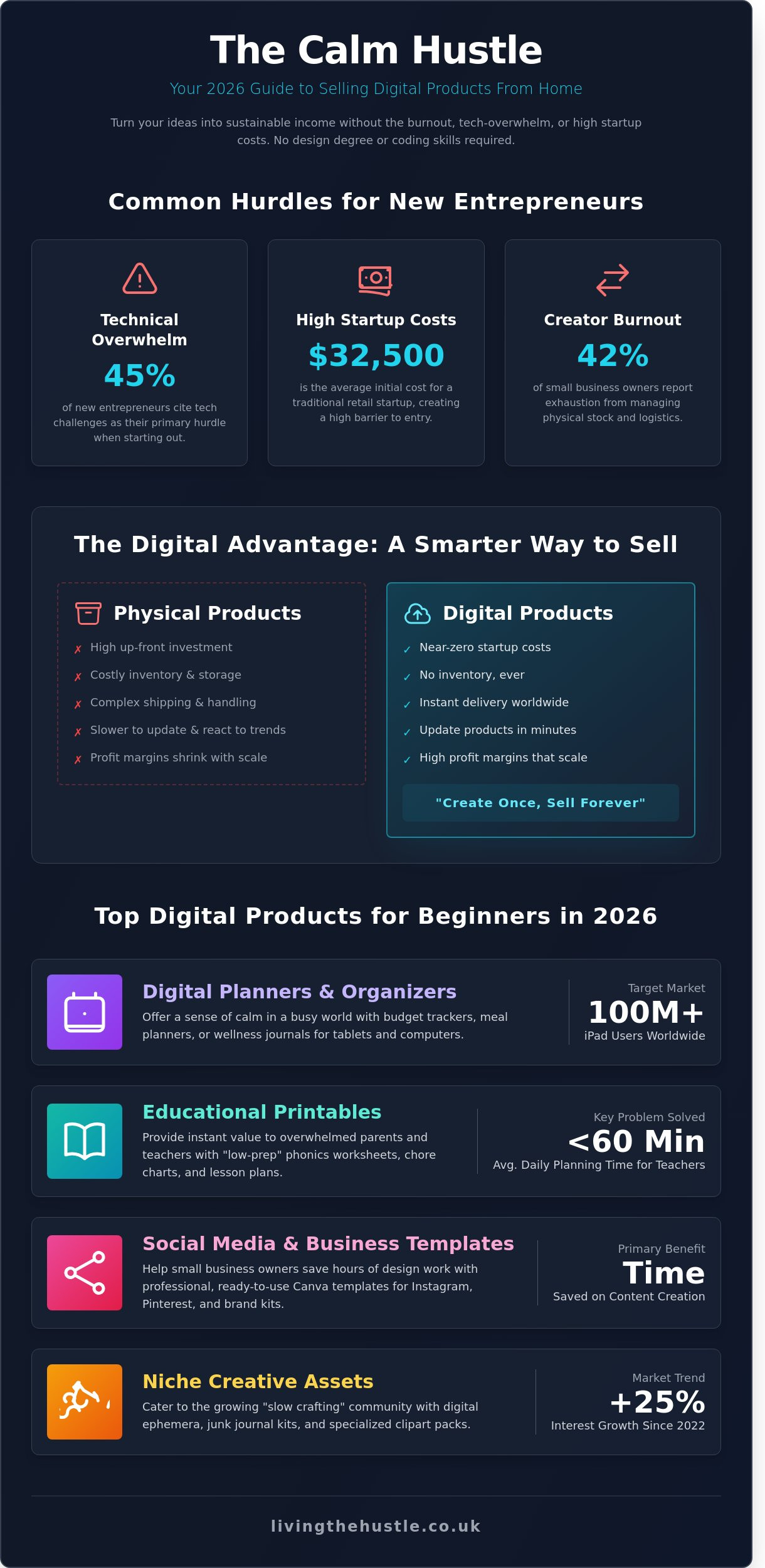
What if your most profitable business move wasn't a louder hustle, but a quieter approach? Let's be honest; the constant pressure to “grind” is exhausting. You likely feel that without expert design skills or a tech degree, the door to online success is locked tight. It's a common fear, especially since 45% of new entrepreneurs cite technical overwhelm as their primary hurdle when starting out. If you're looking for the best digital products to sell from home in 2026, you don't need to be a professional artist or a coding wizard to succeed.
You've probably felt that nagging worry that you'll spend 40 hours on a product that nobody wants to buy. I agree that your time is too precious to waste on guesswork or high-stress marketing tactics. This guide is your gentle roadmap to building a sustainable stream of income right from your kitchen table. I'll show you how to create high-demand items that practically sell themselves, even if you're starting with zero experience. We're going to walk through the top-performing categories for 2026, the simple tools that handle the “tech stuff” for you, and a calm strategy to launch your shop with confidence.
Key Takeaways
- Learn how to turn your ideas into “sell forever” assets that create a calm, sustainable stream of income right from your kitchen table.
- Discover the most profitable digital products to sell from home in 2026, ranging from helpful educational printables to organization tools that solve real problems.
- Demystify the design process using simple, beginner-friendly tools that help you create professional-quality goods without needing any prior design experience.
- Find your “gentle first step” by choosing the right platform for your shop, ensuring your business grows at a pace that feels manageable and rewarding.
- Master the transition from making your first sale to building a heart-centered brand that fosters community and encourages repeat customers.
What are Digital Products and Why Sell Them From Home?
Have you ever wondered why some creators seem to earn money while they sleep without ever visiting a post office? At its core, a digital product is an intangible asset that you deliver to a customer electronically. This includes items like PDF workbooks, Canva templates, or even sewing patterns. Because these products exist only as data, you never have to deal with bubble wrap or shipping labels. This creates a “create once, sell forever” cycle. It is the most effective way to build digital products to sell from home because your profit margins stay high regardless of how many units you move.
Not sure which product to make first? I researched 10 unsaturated ideas in eRank so you don't have to — grab the free guide.
Starting a business shouldn't mean risking your life savings on inventory. Data from 2024 shows that traditional retail startups face average initial costs of $32,500. Conversely, a digital creator only needs a laptop and a basic internet connection to begin. This low barrier to entry allows you to start small and scale with confidence. Finding the right digital products to sell from home allows you to test ideas quickly without financial ruin. You can explore these realistic passive income ideas to see how this model fits into a busy lifestyle while keeping your overheads near zero.
The “Calm Hustle” Philosophy
Too many people move from “purpose to panic” when they start an online shop. They expect instant results and burn out within weeks. The Calm Hustle is about moving slowly and intentionally. In your first 90 days, your goal isn't just sales; it's about learning what your audience needs. Let's be honest, building a business takes effort, but it shouldn't cost you your mental health. By choosing digital assets, you avoid the heavy lifting of physical stock, which currently contributes to 42 percent of small business owner exhaustion. Slow growth is still growth, and it's much more sustainable for your long term success.
Why Digital Goods Beat Physical Products in 2026
As we move into 2026, the consumer's need for speed has reached a peak. Buyers now value the “buy and download” psychology more than ever before. There are no shipping delays, no lost packages, and zero storage fees. If a customer suggests an improvement, you can update your file in minutes. In contrast, physical sellers are often stuck with months of outdated stock. This agility allows you to respond to trends in real time. You get to keep more of your money because you aren't paying for manufacturing or warehouse space. It's a cleaner, faster, and more profitable way to work from your own living room.
Top 5 Digital Products to Sell from Home for Beginners
Starting your journey shouldn't feel like a mountain to climb. When you're looking for digital products to sell from home, the best approach is to find a small, specific problem and solve it beautifully. In 2023, the global digital goods market was valued at approximately $2.1 trillion. This growth proves that there's a massive audience waiting for your unique ideas. You don't need a degree in graphic design; you just need a bit of creativity and a gentle plan.
One of the most rewarding areas is educational printables. Parents and teachers are often overwhelmed and looking for ways to simplify their day. Whether it's a set of “low-prep” phonics worksheets or a colorful chore chart, these products provide instant value. Since 72% of teachers report having less than 60 minutes for daily lesson planning, your ready-to-print assets can become their favorite shortcut. It's about turning your skills into a helpful resource for others.
Digital Planners and Organisation Printables
Why do planners consistently top the charts on marketplaces like Etsy? It's because they offer a sense of calm in a busy world. While paper planners are still loved, the move toward digital is undeniable. With over 100 million iPad users worldwide as of late 2023, the demand for tablet-friendly planners is skyrocketing. You can niche down into budget trackers, meal planners, or wellness journals. These products allow users to organize their lives without the bulk of a physical book, making them a top choice for anyone seeking a more streamlined routine.
Social Media and Business Templates
Small business owners often struggle to keep up with the constant need for fresh content. You can help them look professional by creating Canva templates for Instagram carousels, Pinterest pins, or brand kits. This is a high-demand category because it saves the buyer hours of design work. If you feel ready to turn this into a scalable business, you might want to join the Template Creators Society to grow with support. Helping others build their dreams is a wonderful way to build your own.
Niche Creative Assets (Clipart & Junk Journals)
The “slow crafting” movement has seen a 25% increase in interest since 2022. This has led to a surge in demand for digital ephemera and specialized assets. You can find success by selling junk journal printables to a dedicated community of creators. Another fantastic option is learning how to build a successful clipart business from scratch. Packaging your designs into bundles can increase your profit margins by up to 30% per sale. If you're feeling a bit stuck, you can check out the art of design to help your products truly shine in a crowded market.
Choosing the Right Platform: Where to Sell Your Digital Goods
Deciding where to host your creations is your gentle first step toward building a sustainable income. You don't need a complex tech stack or a degree in web development to start. In 2026, Etsy remains the gold standard for anyone creating digital products to sell from home because it solves the most stressful part of any business: finding your first customer. It's about starting where the people are, rather than trying to build an island in the middle of the ocean and hoping someone swims by.
Marketplaces offer a sense of security that a solo website can't provide on day one. They act like a busy digital mall where shoppers are already walking the aisles with their credit cards ready. This built-in traffic means you can focus on your designs rather than panicking about marketing. To make sure you're entering a profitable space, many successful creators use eRank for Etsy sellers to identify low-competition niches. This tool helps you see exactly what people are searching for. You can analyze search volume and see how many other shops are selling similar items, which removes the fear of the unknown and replaces it with data-backed confidence.
Marketplace Selling (Etsy, Creative Market)
Starting on a marketplace like Etsy or Creative Market is the fastest way to get your shop live. Etsy reports over 96.2 million active buyers as of recent 2024 data, giving you access to a global audience immediately. You won't have to manage payment security or technical site maintenance, which reduces the mental load significantly. The low barrier to entry is perfect for testing ideas. You can list a new printable for just $0.20 and see if it resonates with the market.
- Pros: Minimal setup time, trusted payment systems, and massive existing traffic.
- Cons: You'll pay a $0.20 listing fee and a 6.5 percent transaction fee. Competition is high, and you have limited control over your shop's branding.
Selling on Your Own Website (Shopify, Stan Store)
Moving to your own domain is a powerful move once your brand starts to grow. Most experts suggest making this transition when your monthly sales consistently cover the $39 cost of a basic Shopify plan or when you hit $1,000 in monthly revenue. Owning your site means you own your customer data and keep more of your hard-earned money. Platforms like Stan Store have become popular for creators who sell digital products to sell from home through social media, offering a checkout process that takes less than 30 seconds.
- Pros: Full brand control, no competitor ads on your product pages, and higher profit margins.
- Cons: You are responsible for driving 100 percent of your own traffic. Without a strong social media presence or an email list, your site might stay hidden from the world.
Creating Professional Products Without Design Skills
Let's be honest; the fear of not being “artistic” enough keeps many people from starting. You might think you need a degree in graphic design or expensive software to create digital products to sell from home. That simply isn't true. In 2024, market data showed that over 55% of successful digital product sellers are self-taught creators who started with zero formal training. You don't need to be a pro; you just need the right system and a gentle approach to learning.
Building a shop is about solving problems, not just making things look pretty. By using resources like Creative Fabrica for commercial-use graphics or fonts, you skip the hardest part of the creative process. However, you must use these tools ethically. Simply reselling a template you bought is a quick way to get your shop closed. Instead, focus on adding unique value. Change the fonts, adjust the layouts, and inject your own brand personality. Your customers pay for the convenience and the specific solution you provide. If you can drag, drop, and click, you have all the technical skills required to build a profitable side hustle.
Mastering Canva for Digital Products
Canva is the ultimate secret weapon for non-designers. With over 175 million monthly active users as of early 2024, it's become the industry standard for accessibility. To succeed, you should focus on the “editable link” model. This allows your customers to tweak colors or text to fit their specific needs, which increases the value of your offer. If you want to move beyond basic templates, you can learn to create products that truly pop by exploring The Art of Design. This helps you build products with purpose, not panic.
The Role of AI in Product Creation
AI is a powerful assistant that can help you overcome the “blank page” syndrome. Use tools like ChatGPT to brainstorm 50 product ideas in five minutes or to draft the initial copy for a 20-page workbook. It's about efficiency, not replacing your unique voice. You can also generate custom textures or patterns to ensure your digital products to sell from home don't look like everyone else's. Always keep the human touch. AI provides the foundation, but your personal insights and empathy for your customer's struggle are what actually close the sale.
Ready to elevate your shop's aesthetic and beat the competition? Master the art of design today.
Building Your Passive Income Society: From First Sale to Sustainable Brand
Making your first sale is a beautiful milestone. It provides the concrete proof that your ideas have value and that people are ready to pay for your expertise. To move away from the constant chase for new customers, you need to shift your mindset. You aren't just listing items on a shop; you're creating a community. When you focus on digital products to sell from home, your ultimate goal is to create a lifestyle of freedom, not just a longer to-do list.
Sustainable success comes from building a list of loyal supporters. Research from BIA/Kelsey indicates that repeat customers spend 67 percent more than new ones. You can capture this potential by gathering customer emails from day one. Offering a small freebie in exchange for an email address allows you to nurture a relationship. Instead of hoping people find your shop again, you can invite them back whenever you launch something new. If you want to see how this structured approach looks in practice, read this Passive Income Society review to understand the long-term path to success.
Operating in calm mode means you prioritize systems over manual labor. You don't need to be glued to your laptop 24/7. By setting up an automated email welcome sequence, you can greet every new subscriber and introduce them to your best work while you are out for a walk or spending time with family. This automation acts as your silent business partner, ensuring no opportunity is missed.
Branding Your Home Business
Trust is the primary currency of the internet. A 2019 Edelman report found that 81 percent of consumers must trust a brand before they consider buying. You can build this trust by building your brand without the overwhelm. Start with a cohesive color palette and clear fonts that reflect your style. Your “About Me” page should be honest and relatable. Share why you started your shop. When customers connect with your story, they stop seeing a transaction and start seeing a person they want to support.
Scaling Calmly and Methodically
Scaling your business doesn't require a frantic rush to create hundreds of items. In fact, refining your top three bestsellers often yields better results than launching ten mediocre ones. Use data to see what your audience loves, then double down on those themes. You can also implement “Product Bundles” to increase your average order value. Grouping related digital products to sell from home into a discounted package provides massive value to the customer while boosting your revenue instantly.
Your journey to financial freedom is a marathon, not a sprint. It starts with one small product and one gentle step forward. Be patient with yourself as you learn the ropes. You have the tools, the talent, and the community to make this happen. Start today, keep it simple, and watch your calm business grow.
Your Next Step Toward a Calmer Hustle
Creating a sustainable income doesn't have to feel like a frantic race. By focusing on simple designs and the right platforms, you can transform your creative ideas into a profitable reality. We've explored how choosing the best digital products to sell from home allows you to reclaim your time while building a brand that lasts. It's about working with purpose, not panic; it's about finding that gentle path to financial freedom that fits your specific lifestyle. Whether you're a busy parent or a creative looking for a side project, the tools available in 2026 make it easier than ever to start without the technical headache.
You don't have to navigate this journey alone. Over 10,000 students have already empowered themselves through our community, which was recently featured in the “Most Popular Courses 2026” list. We specialize in helping you move past the tech overwhelm and into a place of quiet confidence. Join the Passive Income Society and start your calm digital hustle today! You've got the talent and the tools. Now, it's time to take that first gentle step toward the life you've been dreaming of. We're ready when you are.
Frequently Asked Questions
What are the most profitable digital products to sell from home in 2026?
Niche AI prompts and interactive digital planners are the most profitable choices for 2026. Market data from 2024 shows that the specialized planner market is growing by 15% every year. You might also look into Google Sheets templates for financial tracking or specific hobbyist workbooks. These products solve clear problems, which means you can charge a premium price while keeping your daily workflow calm and manageable.
Do I need a business licence to sell digital products from home?
You don't usually need a license to start, but you should always check your local city or county regulations. About 75% of new digital creators in the US start as sole proprietors without formal registration in their first few months. It's a gentle way to test your ideas before committing to complex paperwork. Just remember to track your income for tax purposes from day one to avoid any panic later.
Can I really sell digital products if I am not a graphic designer?
You don't need to be a professional designer to create beautiful digital products to sell from home. Over 60% of successful printable sellers use simple tools like Canva or Kittl to build their inventory from scratch. These platforms offer pre-made layouts that give you the confidence to produce high-quality work without years of training. Focus on your unique ideas and helpful content rather than complex technical skills to find your rhythm.
How much money can I realistically make in my first year?
Most new creators earn between $500 and $5,000 per month by the end of their first year. A 2023 industry survey showed that 40% of digital sellers reached the $1,000 monthly milestone within 12 months of opening their shop. Your results depend on how consistently you list new items and optimize your shop for search. Start small, stay patient, and watch your income grow at a pace that feels sustainable for your life.
Is Etsy still the best place to sell digital products?
Etsy remains the top choice for beginners because it gives you immediate access to 96.2 million active buyers. You don't have to worry about driving your own traffic right away, which makes the process much less overwhelming for a total beginner. While platforms like Shopify offer more control, Etsy provides a gentle entry point into the market. It's the perfect place to build your confidence while you learn the ropes of online selling.
How do I protect my digital products from being stolen or copied?
You can protect your work by flattening your PDF files and including a clear terms of use page in every download. While you can't stop every copycat, 90% of intellectual property issues are resolved quickly with a standard DMCA takedown notice. Focus on building a unique brand voice that people want to support. This creates a loyal community that values your original work, making the occasional copycat much less of a worry for you.
What tools do I need to start a digital product business from home?
You only need a laptop, an internet connection, and a free Canva account to begin your journey. Research shows that 85% of successful digital creators started with an initial investment of less than $100. You might eventually add a keyword tool like eRank for $5.99 a month to help your digital products to sell from home get found by the right people. Keeping your toolkit simple helps you stay focused and prevents that common feeling of tech overwhelm.
How do I find a niche that isn’t already saturated?
Find a profitable niche by looking for specific problems within a broad category rather than trying to appeal to everyone. Instead of making general planners, try homeschooling planners for ADHD students or budget trackers for travel nurses. Long-tail keywords like these have a 36% higher conversion rate because they target a very specific need. This approach ensures you aren't fighting for space in a crowded market, allowing your business to grow with purpose and calm.