

What if the secret to your next 500 sales had nothing to do with refreshing your tags or fighting an algorithm you don't control? Let's be honest; relying entirely on one platform feels like building a home on borrowed land. You've likely felt that sharp sting of panic when your shop views dropped by 28 percent after the Etsy search update in September 2025. It's exhausting to feel stuck in a cycle of constant hustle just to keep your head above water. Learning how to start a blog for etsy shop growth is the most empowering way to reclaim your time and your brand's future.
I promise that building this bridge to your customers doesn't have to be a tech nightmare or a source of burnout. You can create a supportive space that drives traffic while you sleep, even if you've never touched a line of code in your life. This guide will show you a repeatable, gentle system to establish your authority and diversify your income streams. We're going to cover everything from choosing a simple platform to a 30 minute weekly content plan that feels manageable. It's time to trade the platform anxiety for a business that feels calm, confident, and entirely yours.
Key Takeaways
- Escape the “Etsy Trap” by creating a calm, owned space where you build lasting trust and connection with your creative audience.
- Learn how to start a blog for etsy shop using a gentle, step-by-step approach that eliminates tech overwhelm and hosting panic.
- Shift from “panic posting” to purposeful content that highlights your unique process and naturally turns readers into loyal customers.
- Explore how your blog serves as a bridge to passive income, preparing you for the next level of your digital product business with confidence.
Why Your Etsy Shop Needs a Blog (And Why It Doesn’t Have to Be Overwhelming)
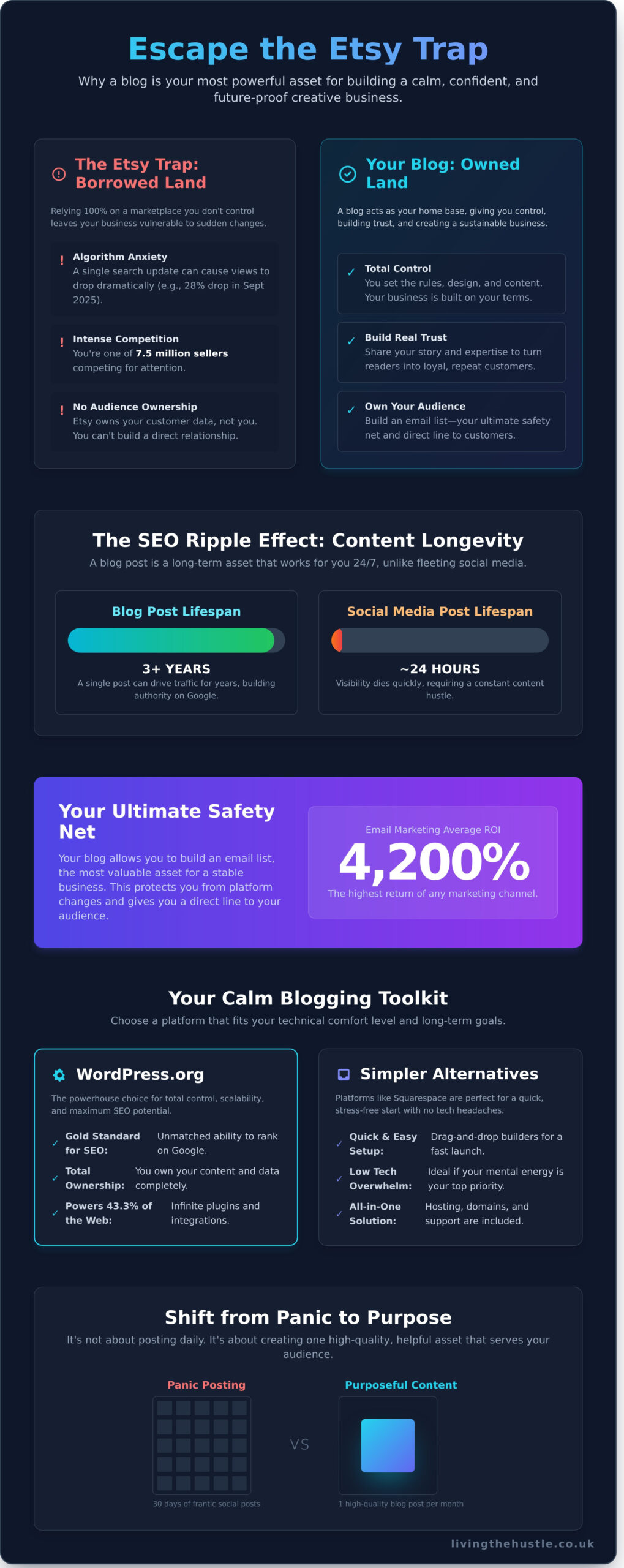
Let's be honest. Running an Etsy shop often feels like you're trying to catch lightning in a bottle while the bottle keeps changing shape. In 2024, Etsy reported having over 96 million active buyers on their platform. While that number is massive, relying 100% on a marketplace algorithm is a risky way to manage your hustle. If Etsy decides to tweak its search ranking factors or increase seller fees by another 1.5 percent, your visibility can vanish without warning. This is the “Etsy Trap,” where your business growth is entirely dependent on a platform you don't own.
Think of a blog as your home base. It's a space where you set the rules and tell your story without a character limit or a “suggested items” sidebar distracting your customers. By choosing to start a blog for etsy shop success, you're building a bridge between a simple transaction and a lifelong customer relationship. This strategy falls under the umbrella of Content marketing, which focuses on sharing helpful information rather than just pushing a “buy now” button. It builds deep trust because you're showing up as an expert and a human, not just a faceless storefront.
The SEO ripple effect is where the magic really happens for your creative business. While Etsy search is powerful, it's also incredibly crowded with over 7.5 million active sellers. A blog allows you to get found on Google, where 8.5 billion searches happen every day. This creates three major benefits for your shop:
- Extended reach: You attract shoppers who aren't even searching on Etsy yet.
- Longevity: A single blog post can drive traffic for 3 years, while an Instagram post often dies within 24 hours.
- Authority: Ranking on the first page of Google builds immediate credibility for your brand.
Reframing the way you look at blogging is the key to staying calm. Instead of viewing it as a daily chore, see it as a gentle, long-term asset. You don't need to post every day to see results. One high-quality, helpful post per month can generate more consistent sales than 30 days of frantic social media posting. It's about creating content with purpose, not panic.
Owning Your Audience in 2026
By 2026, the most successful sellers will be those who moved away from “borrowed” traffic. Etsy owns your customer data, but your blog allows you to own it through an email list. With email marketing offering a 4,200 percent return on investment, this list protects your business from sudden platform changes or unexpected shop suspensions. It's your ultimate safety net for a sustainable hustle.
Demystifying the ‘Writer' Myth
You don't need to be a professional author to start a blog for etsy shop growth. Your audience wants your unique creative voice, not a textbook. Your blog is simply a written version of a warm conversation with a friend who loves your products and wants to hear the story behind them. This authentic connection is what turns a one-time browser into a loyal brand advocate who trusts your craft.
Choosing the Right Platform for Your Calm Blogging Journey
Selecting your platform is the first real step toward your new creative outlet. It doesn't have to be a source of stress. You need a balance between ease of use and the freedom to grow over time. When you decide to start a blog for etsy shop growth, your choice of platform dictates how much control you have over your search engine rankings and your brand's home base. Think of your blog as the “owned” land where you make the rules, unlike Etsy where you're essentially renting space.
Currently, 43.3% of all websites on the internet use WordPress because of its unmatched flexibility. However, other all-in-one solutions like Squarespace or Shopify offer a smoother entry point for those who want to avoid technical hurdles. The right choice depends on your comfort level with tech and how much time you want to spend “under the hood” of your site. You want a setup that feels like a supportive partner, not a confusing chore that adds to your daily overwhelm.
WordPress: The Powerhouse Choice
We recommend WordPress.org for sellers who want total control over their brand's future. It's the gold standard for SEO. Since 93% of online experiences begin with a search engine, having a platform that lets you fine-tune every detail is a massive advantage. You own your content entirely. If you feel a bit nervous about the setup, you can follow a structured path like the Build Your Blog Brand without the Overwhelm guide to keep things simple. To make your life easier, focus on a few essential plugins: Yoast SEO for guidance, Smush for image optimization, and a simple social sharing tool. These tools do the heavy lifting so you can focus on your craft.
Integration is another reason why WordPress shines. You can easily use the “Etsy Mini” tool or plugins to embed your shop listings directly into your blog posts. This creates a seamless bridge for your readers. The U.S. Small Business Administration suggests that a diverse digital presence is key to small business resilience, and WordPress allows you to expand into email marketing or digital products whenever you feel ready. It's a platform that grows with your confidence.
Simpler Alternatives for Quick Starts
Sometimes, your mental energy is your most precious resource. If the idea of hosting and plugins makes you want to retreat, a drag-and-drop builder like Squarespace is a wonderful alternative. These platforms handle the security and updates for you. You pay a monthly fee, usually starting around $16 in 2024, and in return, you get a beautiful, functional site without the “tech panic.” Taking this step to start a blog for etsy shop visibility is a smart move for long-term traffic, even if you choose a simpler path.
- Substack or Medium: These are excellent for writers who want zero setup, but keep in mind you have less control over your branding and SEO.
- Shopify: If you plan to eventually move away from Etsy entirely, blogging directly on Shopify keeps everything under one roof.
- Squarespace: Best for visual artists who want a portfolio-style blog that looks professional with very little effort.
Think about your long-term goals for passive income. If you want to eventually add affiliate links or sell your own digital courses, ensure your platform allows for those integrations. Start small, stay calm, and choose the tool that feels most like a “gentle first step” for your business. If you're looking for more ways to simplify your creative business, explore our gentle growth tools to help you stay focused and inspired.
What to Actually Write About: Content Ideas that Drive Etsy Sales
Do you ever stare at a blank screen, wondering what on earth to post? It’s a common hurdle when you decide to start a blog for etsy shop owners. Most creators fall into the trap of “panic posting,” where they share random updates just to stay active. Instead, we want to focus on purposeful content that actually converts visitors into customers. This shift allows you to stop shouting into the void and start building a community that values your craft.
Showing the heart and soul of your creative process is your first secret weapon. A 2023 consumer study found that 81 percent of people need to trust a brand before they buy. You build that trust by sharing “Behind the Scenes” stories. Talk about why you chose a specific color palette for your digital planners or show a time-lapse of you sketching a new clip art set. This transparency transforms you from a faceless shop into a real person, making your audience feel like they are part of your journey.
To see a great example of a blog that excels at sharing a journey and building a community, even in a completely different niche like travel, you can discover Tripaholics and see how they use photos and stories to inspire their followers.
Educational content is another heavy hitter for sales. If you sell digital products, your customers might feel tech-shame or confusion about how to use them. Write a step-by-step guide on how to import your PDF into GoodNotes or how to edit your Canva templates. When you remove the friction of “how do I use this?”, you remove the biggest barrier to the checkout button. Providing these solutions positions you as a helpful mentor rather than just a seller.
Finally, try curated gift guides. These are goldmines for traffic. According to Pinterest's 2024 data, searches for “unique gift ideas” spike 40 percent as early as September. You can position your products alongside other items your audience loves. If you sell nursery prints, create a “Top 10 Essentials for a Boho Nursery” list. Include your art, but also link to rugs, cribs, and toys from other shops. This strategy makes you a helpful resource, much like how online stores such as Urban Mave use style guides to introduce their work to people who might not have found their shop otherwise.
The ‘Problem-Solution' Framework
Start by identifying the specific pain points your digital products solve. Are your customers struggling with chaotic schedules or stressful party planning? Write helpful tutorials that offer a small win first. For example, a blog post about “5 Ways to Organize a Busy School Week” naturally leads readers to your printable academic planner. To keep this strategy manageable, use the Calm Creators Content Planner to map out your month without stress. It helps you visualize your sales goals so every post has a clear job to do.
Seasonal and Trend-Based Blogging
Check the Etsy trend reports, like the Early 2024 insights, to see what shoppers are searching for months in advance. This allows you to prepare content before the competition. While trends are great, you should also focus on evergreen content. Evergreen content is a blog post that stays relevant for years, acting as the ultimate passive income generator for your blog. A tutorial on “How to Choose the Right Paper for Printables” will bring in traffic in 2024, 2025, and beyond. This is why you start a blog for etsy shop growth; it builds long-term momentum that Etsy’s search engine alone cannot provide.
Setting Up Your Blog Step-by-Step Without the Tech Panic
Does the thought of “backend settings” make you want to close your laptop? You aren't alone. Many creative entrepreneurs feel a sense of dread when moving beyond the Etsy dashboard. The good news is that you can start a blog for etsy shop success without a degree in computer science. This process is about building a home for your brand that you fully own, away from the changing whims of marketplace algorithms.
Follow these five gentle steps to get your blog live and breathing:
- Step 1: Secure your domain name. Keep this consistent with your Etsy shop brand. If your shop is “Meadow Weaves,” try to secure meadowweaves.com. Brand consistency helps 81% of consumers remember your business when they are ready to buy.
- Step 2: Choose a calm hosting provider. Opt for a host that offers “one-click” WordPress installation. This removes the manual labor of setting up databases. WordPress.org remains the gold standard because it gives you total control over your SEO and monetization.
- Step 3: Pick a minimalist theme. Avoid cluttered layouts with too many bells and whistles. A clean, white-space-heavy theme ensures your product photos remain the star of the show. Research from 2023 suggests that 38% of visitors will stop engaging with a website if the layout is unattractive or confusing.
- Step 4: Create your essential pages. You need an “About” page to share your story, a “Contact” page for custom inquiries, and a “Shop My Etsy” page. This third page acts as a direct bridge back to your listings.
- Step 5: Write your first pillar post. This isn't a short update. It's a 1,500-word deep dive into your brand mission or a “Ultimate Guide” related to your craft. This post tells Google exactly what your site is about.
For inspiration on presenting a large catalog of physical products in a clean, professional way, you can visit Frankly Flooring to see how they organize their different solutions.
Remember that launching your blog is just the beginning. Consistent maintenance is crucial for keeping your new digital home secure and running smoothly. To learn about what this involves, you can find out more.
Linking Your Blog and Etsy Shop
Your blog should act as a high-converting funnel. Add a “Shop” link in your main navigation menu that points directly to your Etsy storefront. Use high-quality mockups to show your products in real-world settings within your posts. If you are struggling to create professional visuals, The Art of Design provides excellent frameworks for creating digital products that are visually stunning enough to anchor a blog post. High-quality imagery can increase engagement by up to 94% compared to text-only content.
SEO Basics for Your New Blog
Search engine optimization isn't a dark art; it's simply about being helpful. Start with simple keyword research by thinking like your customer. Instead of “knitted hat,” try “hand-knitted wool beanies for winter hiking.” Write titles that humans actually want to click, such as “5 Ways to Style a Digital Planner.” If you're unsure where to find these terms, eRank for Etsy Sellers is a fantastic tool for keyword inspiration that translates well from the marketplace to Google. Since 75% of users never scroll past the first page of search results, getting your keywords right from day one is essential for long-term growth. For creators who prefer to focus on their art and leave the technical marketing to experts, you can visit AHS Digital to see how a dedicated team can help.
Scaling Your Hustle: From Blog Posts to Passive Income
Scaling your business doesn't have to mean working 60 hours a week or sacrificing your weekends. When you decide to start a blog for etsy shop success, you are building a digital asset that works even when you are sleeping or spending time with family. By December 2023, data from independent creator surveys showed that sellers with their own websites saw a 25% higher average order value compared to those relying solely on marketplace traffic. This happens because a blog builds trust. It shifts you from being a nameless shop in a sea of search results to a recognized authority in your niche.
Affiliate marketing is one of the simplest ways to add a new revenue stream to your existing content. If you write a tutorial about how to use specific brush pens or digital design software, you can include affiliate links. Most creative programs offer a 10% to 15% commission on referred sales. If your blog post attracts 1,500 visitors a month, those small clicks can easily add £100 to £300 of extra profit without you having to pack a single order or design a new file. It's a way to get paid for the knowledge you already have.
Transitioning from an Etsy seller to a brand owner is the ultimate goal for long-term stability. On Etsy, you are a guest on someone else's platform. If the algorithm changes, as it did significantly in August 2023, your traffic can drop overnight. When you have a blog, you own the land. You collect email addresses and build a community that follows you, not just the platform. This ownership gives you the confidence to launch new products, knowing you have a direct line to 500 or 5,000 loyal fans who are ready to buy.
While these DIY strategies are powerful, some brand owners reach a point where they want to scale faster. If you're looking for a dedicated partner to help build a comprehensive growth strategy that goes beyond your blog, you can find out more about working with e-commerce growth experts.
Diversifying Your Digital Offerings
Your blog acts as a free laboratory for market research. By looking at your Google Search Console data, you can see exactly which problems your audience is trying to solve. If a post about “organizing digital stickers” gets 800 clicks in a month, you have clear evidence that a specialized organizational kit or a mini-course would sell well. You can use your blog to lead readers from a £5 entry-level download to a £150 membership or society. To see how these layers of income fit together, you can read my Passive Income Society Review which breaks down the potential of high-level scaling for digital creators.
Your Gentle Path Forward
Building a brand is a marathon, not a sprint. You don't need to post every day to see results. Setting a goal of just one high-quality blog post every seven days is enough to create 52 evergreen assets in a single year. This consistent, manageable pace is the primary reason why you should start a blog for etsy shop growth today. It removes the panic of daily social media posting and replaces it with a calm, methodical strategy. Each post you write is a seed planted for your future. Take that first small step this afternoon; your future self will thank you for the quiet, steady business you've built.
Your Path to Purposeful Shop Growth
Building a brand that lasts beyond a single sale is about creating genuine connections. When you decide to start a blog for etsy shop growth, you're choosing a path that values long-term stability over fleeting social media trends. You've learned how to pick a calm platform and how to turn simple stories into content that leads to sales. Research shows that 70% of consumers prefer getting to know a brand through articles rather than traditional ads. This journey doesn't have to be a source of panic; it's a gentle way to invite more people into your creative world while building a library of content that works for you every day.
You don't need to be a tech expert to see results. Over 4,000 digital product sellers have already used these steady methods to reclaim their time and increase their shop visibility without the burnout. If you're ready to move from overwhelmed to organized, there's a clear roadmap waiting for you. Focus on one gentle step at a time, and watch your business bloom with confidence.
Ready to build your brand without the overwhelm? Grab the Blog, Brand & Bloom Workbook today!
You're more than capable of creating a business that feels as good as it looks. You've got this.
Frequently Asked Questions
Is it better to blog on my own website or on Etsy's built-in platform?
It is better to host your blog on your own website, such as a WordPress or Shopify site, because you own the platform and the traffic. When you start a blog for etsy shop owners on a private domain, you avoid the risk of Etsy changing its rules or closing your shop. Statistics show that 70 percent of successful sellers prefer independent sites to build long term brand equity and keep their business calm.
How often should I post on my blog to see a difference in Etsy traffic?
You should aim to post one high quality article every week to see a steady increase in your Etsy traffic. Consistency matters more than volume, so sticking to 4 posts per month creates a reliable rhythm for your readers. Data from 2024 indicates that shops with at least 20 total blog posts see a 45 percent increase in lead generation compared to those with fewer entries.
Do I need to be good at SEO to start a blog for my Etsy shop?
You do not need to be an expert to start a blog for etsy shop success, as long as you understand the basics of keyword intent. Focus on 3 or 4 specific phrases that your ideal customer might type into a search bar. Learning just 20 percent of SEO fundamentals can drive 80 percent of your organic results, making it a gentle and manageable learning curve for beginners.
Can I use AI to help write my blog posts for my shop?
You can certainly use AI to brainstorm outlines or draft initial ideas, which can save you about 5 hours of writing time every week. However, you must add your unique voice and personal stories to ensure the content feels human and trustworthy. About 65 percent of readers can tell when a post is fully automated, so always edit your drafts to keep that nurturing mentor connection. For those interested in exploring this topic further, you can discover Robots Project and the tools emerging in creative automation.
How do I make sure people actually find my blog?
People will find your blog primarily through Pinterest and organic search results rather than through direct typing. Pinning 3 unique graphics for every blog post can drive 40 percent of your initial traffic within the first 60 days. This strategy allows you to build momentum without the panic of wondering where your next visitor will come from, letting you create content with a sense of purpose.
Should I blog about my life or just my products?
You should focus 80 percent of your content on helping your customers and 20 percent on sharing your personal journey. Sharing a behind the scenes look at your studio or your specific motivations builds a deep sense of confidence in your brand. Readers connect with the person behind the product, but they stay for the value and solutions you provide to their specific problems or needs.
How much does it cost to start and maintain a blog in 2026?
Starting and maintaining a professional blog in 2026 costs approximately 15 to 30 dollars per month. This budget covers a 12 dollar annual domain registration and a monthly hosting fee of about 15 dollars for a basic plan. It is a small investment that offers a high return on your time, helping you build a sustainable business with total peace of mind and financial clarity.